• Home
  • Air Races
  • Aeroplanes
  • Aviators
  • Pioneering Flights
  • Pioneering Women
  • Flying for All
  • Gallery
  • Wings of Peace [Aeromodelling]
  • Contact Me
Details
Hits: 2503

 Click here to see the Newsreel!


10-11 September, 1937. Hatfield.

Story of the race:

Pilot Aircraft Race No Fate
Mr Robert J Waight de Havilland Technical School T.K.4 G-AETK 1 9th
Capt Edgar W Percival Percival E.2H Mew Gull G-AFAA 3 3rd
Mr Charles E Gardner Percival E.2H Mew Gull G-AEKL 4 Winner
Mr Ken HF Waller D.H.88 Comet G-ACSS 5 12th
Mr Alexander Henshaw Percival E.2H Mew Gull G-AEXF 6 retired Stoke-on-Trent on Day 2 - water in fuel
Mr H F Broadbent B.A. Double Eagle IV G-AEIN 7 forced landing near Portpatrick on Day 2
Flt-Lt Tommy Rose Miles M2.L Hawk Speed Six G-ADGP 8 10th
Capt Geoffrey R de Havilland de Havilland Technical School T.K.2 G-ADNO 9 retired Blackpool (cowling became unattached)
Wing-Cmdr F W Stent Miles M.5 Sparrowhawk G-ADNL 10 7th
Mr F CJ Butler Percival P.10 Vega Gull G-AEZL 11 eliminated after Day 1
Mr Giles CM Guthrie Percival P.10 Vega Gull G-AFAU 12 5th
Capt T Neville Stack Percival P.10 Vega Gull G-AEYD 13 eliminated after Day 1
Mr Derek S Schreiber Percival P.10 Vega Gull G-AEZJ 15 6th
F/O A H Hole Percival P.10 Vega Gull G-AELE 16 eliminated after Day 1
Flt-Lt David H Atcherley Comper Swift G-ABWH 18 forced landing St Bees Head on Day 2
Flt-Lt Harold L Piper Short S.22 Scion Senior G-AECU 19 eliminated after Day 1
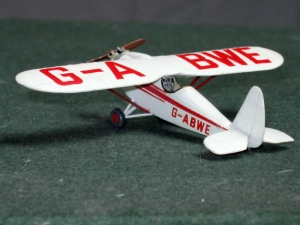
Mr Stanley T Lowe Comper Swift G-ABWE 20 retired at Glasgow
Capt Walter L Hope B.A. Eagle I G-ACRG 21 8th
Mr C S Napier Hendy 302A G-AAVT 22 retired at Edinburgh
Flt-Lt E CT Edwards Miles M.14B Hawk Trainer II G-AEZP 23 retired at Edinburgh
Wing-Cdr E G Hilton Miles M.3A Falcon Major G-AENG 24 crashed at Scarborough - pilot and Wing-Cmdr P Sherren killed
Brig-Gen AC Lewin Miles M.11A Whitney Straight G-AEZO 25 2nd
Sqn-Ldr A V Harvey Miles M.11A Whitney Straight G-AEVH 26 4th
Mr Ernest J Jobling-Purser Miles M.11A Whitney Straight G-AEWK 27 forced landing near Newcastle
Mr Charles F Hughesdon GAL 42 Cygnet 2 G-AEMA 28 13th
Fit-Lt Hugh RA Edwards Wicko GM1 G-AEZZ 29 forced landing at Skegness
Mr C H Willis B.A. Eagle II G-ADID 30 11th


Starters: 27 (out of 31 entries)


Did not start:

Mr F G Miles Miles M.13 Hobby G-AFAW 2  
Mr G M Tonge Vega Gull G-AEZK 14  
Mr H F Broadbent Double Eagle G-ADVV 17  
Mr W H Moss Moss MA1 G-AEST 31  


Details
Hits: 3068

The Aviators

Details
Hits: 3428
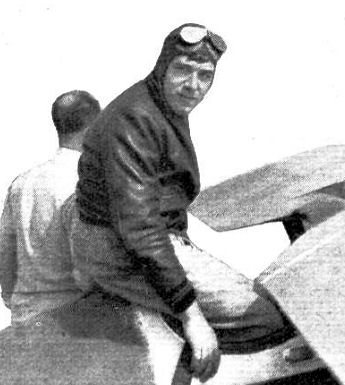
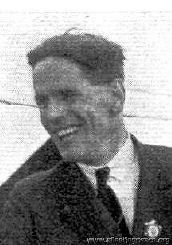
Flt-Lt David Francis William Atcherley DFC DSO

 Twin brother of Richard, so you don't need another photo. "Licences which he holds are (according to himself) motor (endorsed), gun, dog, and 'A'."

He and his brother became "a legend in the RAF".

d. 8 Jun 1952

http://www.rafweb.org/Biographies/AtcherleyD.htm

 
Details
Hits: 3706


 Mr Harry F J Broadbent

  photo: 1937, aged 27


Australian record-breaker (solo round-Australia record in 1931), born 1910.

Listed polo, tennis, golf and cricket among his other pastimes.

Details
Hits: 3412
 Mr Francis Charles Joseph Butler

photo: 1935, aged 20


From Faringdon, Berks. Also a keen yachtsman.

Killed in WWII: 19th June 1940 when a Pilot Officer, RAFVR with 9 Sqn, commemorated at the Runnymede Memorial (i.e. no known grave)

Details
Hits: 3918

 Mr Geoffrey Raul de Havilland

  1936

Geoffrey Junior, aka 'Young D.H.' born in 1910 and learnt to fly at Stag Lane at a tender age. Took over as chief test pilot at de Havillands when Bob Waight was killed.

Second Brit to fly a jet-propelled aircraft on its first flight, the Vampire in 1943. Killed when the second DH108 Swallow broke up and crashed in the Thames estuary in 1946.

Flight 18th April 1946

As a test pilot young D.H., as he is universally called,has not an exceptionally long history. He took over the chief test pilot's position in October, 1937, when R. J. Waight unfortunately lost his life on the T.K.4. Being, however, the son of his illustrious father, Sir Geoffrey de Havilland, who designed, built and test flew his own aircraft from 1911 onwards, young Geoffrey can be said to have been ''in the industry'' from the very cradle. It is not generally known that Sir Geoffrey took his R.Ae.C. ticket No. 53 in February, 1911, on the second machine of his own design and construction, and that he has made many of the first flights on new D.H. types right up to the Moth Minor in 1938.

Geoffrey's first flight is lost in the dim past, but certain it is that at the tender age of six he was flying with father at Hendon in a D.H. 6 (also known as the Clutching Hand). When 18 years of age he left school and came to de Havillands as a premium apprentice for 4 years and learnt to fly on Moths at the firm's reserve training school. After spending two years in the drawing office—much of the time being spent looking out of the windows envying the pilots—he joined the Air Operating Company, who were doing a lot of air survey work in South Africa. This, however, gave him but very little flying, and at the end of six months, he came back to England to become a flying instructor to the D.H. Technical School. The aircraft were wooden Moths built by the students. In 1929 he took his B licence; a very simple business in those days. Some 20 or 30 hours' solo flying, a little cross-country work, a simple "Met" exam, and about one hour's night flying at Croydon was sufficient to qualify.

In 1934 Capt. Hubert Broad was chief test pilot of de Havillands, and Bob Waight looked after the production side. There was so much work, however, that Geoffrey was given the opportunity to lend a hand testing Tiger Moths, Dragons, Rapides, Express Air Liners, and Hornet Moths.

Broad left the company in 1935 and Waight took over, starting, with the Dragonfly and later the Albatross. It was during the period when the prototype Albatross was going through its development flying that Waight lost his life, and de Havilland took over as chief test pilot. Nobody could have taken on a more interesting or more complex job because the Albatross was completely experimental from tip to tail. Engines were new, construction was new, and the layout was extremely advanced.

He had a curious experience on the Albatross. While its strength was ample for all flying loads, some unfortunate drilling had weakened the fuselage under ground loads, and shortly after landing from a test flight the machine broke in halves on the ground.

When war broke out lie was busy testing Oxfords and Flamingoes, but when things became desperate at the time of the Battle of Britain, de Havillands did a big job doing emergency repairs to shot-up Hurricanes.

Dick Reynell of Hawkers came over and gave Geoffrey the "know how" on Hurricanes. A little later Dick went out on operations with his old squadron (No. 43) and was, unfortunately, shot down.' He was an excellent test pilot and a gallant gentleman.

Improvised Runway

Geoffrey flew the first Mosquito at Hatfield on November 21st, 1940, but he is more proud of the first flight of the prototype Mosquito fighter. This was built at a dispersal factory with no airfield. To save some six week's wasted time in transport and re-erection at Hatfield, Geoffrey used local fields by having bridges built over ditches to give him a 450yd run for take-off, and then flew the fighter to Hatfield.

He is, of course, one of the only two men in Britain to have made first flights on jet-propelled aircraft. The Vampire was flown for the first time on September 21st, 1943, but Geoffrey had already flown the Gloster E.28 at Farnborough. The first airing of the Vampire proved it to be a tribute to the D.H. design and aerodynamics staff, as it behaved almost exactly as they had forecast. There was, however, somewhat of an aileron overbalance which limited the speed to 250 m.p.h. and a rather severe tip stall.

Geoffrey de Havilland had made a number of investigation flights on Mosquitoes for compressibility effects, but on the Vampire he has done extensive work. The Vampire, under the effects of compressibility, executes a series of sudden high-speed stalls: the path of the machine is similar to an artist's conception of a streak of lightning, and unless the pilot is strapped-in tightly he is likely to be knocked out by hitting the cockpit roof.

Geoffrey, with another pilot, has flown the Vampire in tight formation at over 500 m.p.h., and to investigate snaking, which is causing considerable trouble on most jet aircraft, he has flown the Vampire with rudder locked.

Like most of the test pilots, he is living on borrowed time, they having at some stage of their careers had close shaves. Strangely enough, Geoffrey's nearest go was on about the mildest type he ever flew. It was the first production Moth Minor. The prototype had completed its spinning tests, and the same tests on the production model appeared to be only a matter of form. He was flying with John Cunningham (now Group Capt., D.S.O.,D.F.C., and test pilot for the D.H. engine division) at the time. The Minor was put into a spin at 5-6,oooft, but after it had failed to come out in five turns and the engine had stopped, a panic decision was made to abandon ship.

Test-flying a Hurricane, too, almost saw him off. This particular aircraft had had a gruelling time in the Battle of Britain, and the whole canopy came off at 4,000ft.hitting him in the face as it blew backwards. At first blind through the amount of blood in his eyes, he flew more by instinct than anything else until he found he could get a little relief by holding his face close to the instrument board. The blood dispersed a little and he was able to land through what appeared to be a thick yellow haze. He wears the scars across his nose to this day, and there was a terrible moment during that flight when he thought he was really blind.

On another occasion the oxygen bottle contained only compressed air, and the effects from this were at first blamed on the previous night's party.

At the other end of the scale was the test of the T.K.5, a tail-first aircraft built by the technical school. Impecunious at the time, Geoffrey had already mortgaged the bonus for the first flight. Imagine his consternation then when, after roaring the whole length of Hatfield airfield, the machine showed no sign of lifting. The forward elevator was ineffective. The T.K.5 never did fly and was finally abandoned.

In the days of peace before the war Geoffrey de Havilland was to be seen at all the air meetings and twice finished 4th in the King's Cup Race flying the TK1 and TK2.


Details
Hits: 3321
 F/O (later Flt-Lt, Sqn Ldr) Edward Cecil Theodore Edwards


  1931, aged 26


Cecil, brother of Hugh. From Kensington, London. Sometimes known as "Sphinx".

M.A.(Oxon); rowing blue in 1925 and 1926 (when he was the "best man in the crew, as always"); the first member of the Oxford Air Squadron to qualify as a pilot.

Flew, with Winifred Spooner, a Desoutter in an attempt to reach Cape Town in 1930, but they had to ditch in the sea off Italy, and swim about a mile to shore.

Winner of the King's Cup in 1931; here is his "Competitor's Armband" from the race:

cecil edwards kings cup armband 1931 

Apparently, after the race, "a triumphant Cecil 'Sphinx' Edwards was invited to Sir Robert MacAlpine's house to celebrate the win (Sir Robert had lent Sphinx his Bluebird aeroplane). On leaving the party, Sir Robert grabbed the trophy, said "Well done Edwards" and that is the last that Sphinx or the family would ever see of the trophy. It is now awarded at Henley as The Prince of Wales Challenge Cup after mysteriously being donated to Henley by an antique shop owner."

with many thanks to Gavin Jamieson, who found the armband among his family's archives


Killed in WWII: 31st August 1940, when a Wing Commander (pilot) 53 Sqn RAF; buried in Rotterdam, Holland.


Details
Hits: 3159
 P/O (later F/O, Flt-Lt) Hugh Robert Arthur Edwards


  1929, aged 23


'Jumbo', the famous Oxford rowing coach, younger brother of Cecil


His grand-daughter's husband Gavin has written Jumbo's story, in four parts, starting here:

https://heartheboatsing.com/2020/02/17/jumbo-edwards-oarsman-coach-and-raf-pilot-part-i/


Details
Hits: 3270
 Mr Charles Exton Gardner

   1931, aged 25


 Aeronautical engineer 'with his own aerodrome at home in Surrey'. Always nice to have.

"Flew to India [in 1936] to compete in the Viceroy's Cup Race"

Details
Hits: 3282
  Mr Giles Connop MacEacharn Guthrie


 1935, aged 19


 1936


Shown here, for comparison, just before, and just after, he grew his moustache.

"Giles Guthrie is the only son of Sir Connop and Lady Guthrie. His enthusiasm for flying has roused his father's active interest in the aviation industry. Only 20 years of age, he is the youngest pilot and the only undergraduate to take part in a long distance air race. For the Johannesburg race, the Cambridge University authorities gave him special leave of absence.

Despite his youth, he is a pilot of considerable experience. The Percival Vega Gull in which Charles Scott and he won the Johannesburg race, first tasted victory in the King's Cup this year. Giles Guthrie then flew as co-pilot with Charles E Gardner .

When Sir Connop decided to enter the machine in the Johannesburg race and chose Charles Scott to fly it, one condition was that Scott should take young Giles with him."

- from the Celebration Dinner programme after the race (October 14th 1936 at Claridge's Hotel).

Had used his Vega Gull for a "good deal of continental touring".

Later Sir Giles, J.P., merchant banker.

Died 1979


Details
Hits: 6107
  Sqn-Ldr Arthur Vere Harvey CBE, Baron Harvey of Prestbury

  1937


b. 31 Jan 1906

'Adviser to the Southern Air Forces in China' in 1937

In June 1938, the Bystander reported that "The first of the Auxiliary Squadrons to undertake co operation with the Army is No. 615, which was formed under Squadron Leader A. V. Harvey at Kenley in June of last year.

Rapid progress has been made during the first twelve months. The Squadron is equipped with nine Hawker Hectors and, in addition, there are two "Harts" and four Avro "Tutors" for training new officers as they join."

He was a British Conservative politician who served as an MP for 26 years.

d. 5 Apr 1994

Arthur Vere Harvey, Baron Harvey of Prestbury - Wikipedia


Details
Hits: 3169
  Mr Alexander Adolphus Dumfries Henshaw

  1932, aged 20


b. 7th November, 1912.

The extraordinary Mr Spitfire. Leant to fly in (of all places) Skegness. "After 25 hours solo bought a Comper Swift and in the 1933 King's Cup Race won the Siddley Trophy with it." In 1936, still the youngest competitor in the race.

d. 24th February, 2007


Details
Hits: 3003
  Wing-Cdr Edward Goodwin Hilton AFC

  1937, aged 42


b. 1895 in Surrey

RFC in WWI

AFC in 1920 for 'gallantry and distinguished services' in 70 Sqn, Egypt

A pilot at Martlesham. Made an attempt at the South Africa - England record in 1936 (flying 'Miss Wolseley', an Airspeed Envoy), but was delayed in Athens and abandoned the attempt.

m. 1926 Joyce Elizabeth [Martin]

Entered the 1937 Kings Cup Race, I'm afraid, "largely out of curiosity''. He was thrown out of the aircraft in very bumpy conditions near Scarborough; his passenger (the owner of the aircraft) Wing-Cmdr Percy Sherren, a native of Crapaud, Prince Edward Island, was also killed in the subsequent crash.


Details
Hits: 2867
  F/O Alan Harold Hole

  1937


 Personal pilot to Lindsay Everard MP (after Winifred Spooner), and 'manager of his private aerodrome at Ratcliffe'


Details
Hits: 3405
  Capt Walter Laurence 'Wally' Hope

  1917, when a 2nd Lieut in the RFC, aged 20
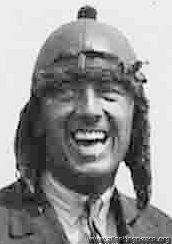
  1928, aged 31
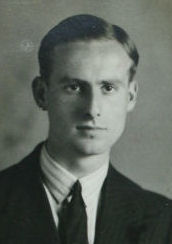
 

Technical director of Air Freight.

b. 9 Nov 1897 in Walton, Liverpool

Aged 18, and described as a "trick-cyclist", he was summoned in 1915 for committing a breach of the Realms Act by taking a photograph of one of his Majesty's ships at Barrow; he pleaded not guilty, admitted that he was carrying a camera, and was fined £5.

A close friend of Bert Hinkler, he made an extensive search over the Alps at his own expense when Bert went missing on his fatal flight in 1934, but then sued the Daily Mirror when they published their hair-raising account of his exploits, "Captain Hope's Ordeal in the Alps". He said there was "not one word of truth in it."

 m. 1920 Marjory [Stone]

Three-time winner of the King's Cup Race (1927, 1928 and 1932)

In the 1926 King's Cup race, "he had to descend at Oxford while racing for home in the last lap with a small “airlock" in his petrol pipe, which effectually put his tiny Moth machine out of the running. He landed in a small field - so small that he found it impossible take off again when his minor trouble had been rectified without pushing his  plane through three fields to a broader stretch of country, where he could rise. By this time it was so late that he decided that would abandon the race and go on at his leisure to Hendon.

Interviewed at his home in Hendon yesterday, Mr. Hope said: “The only thing that I am really disappointed about is that I feel sure that if this trifling mishap had not occurred I should most certainly have won. For three laps I was racing neck and neck with Captain Broad, with an aggregate speed equal to his - between 90 and 91 m.p.h." Daily Herald

At the end of the 1928 race, "Thinking all was over he proceeded to loop and stunt before landing, and having landed switched on his well known winning smile. Suddenly there was a terrific hooting, and Sir Francis McClean in his white Rolls-Royce came tearing across to tell Hope he had not crossed the finishing line... Within 30 seconds Hope was in the air again, discovered the finishing line, landed, and again switched on the winning smile fortissimo." C G Grey

Entered for the MacRobertson Race in 1934 (No 24) but didn't take part in the end.

 m. 1954 Hilda L [Stone or Hunt]

d. Oct 1979 - Isle of Wight


Details
Hits: 3321
  Mr Charles Frederick Hughesdon

 mini - c f hughesdon 1933, aged 24


Lloyds Insurance Broker; he married actress Florence Desmond after Tom Campbell Black's death.

Honorary Flying Instructor to the Insurance Flying Club at Hanworth


Details
Hits: 3176
  Mr Ernest J Jobling-Purser


 photo: 1933, aged 58


From Sunderland, maker of Pyrex glassware


Details
Hits: 3425
Brigadier-General Arthur Corrie Lewin, CB  CMG, DSO


photo: 1931, aged 57


A retired officer, born in Edinburgh, living in Kenya. "I have no great opinion of the value of air-racing today. As a sport it is far behind, say, pig-sticking, steeplechasing or polo".

Address, c/o the Conservative Club, London.

Runner-up in his only King's Cup, though, at the age of 63; impressive.

Heading back to Kenya after the race, he and Mrs Lewin underwent a frightful ordeal; they spent 10 days on a tiny, mosquito-infested island in the Nile swamp after getting lost and making a forced landing. The Whitney Straight entangled its wheels in the grass and nosed over; they had to extricate themselves, to find that they only had a packet of sandwiches and a gallon of water between them, which they made to last for about 3 days.

Luckily they were spotted after 4 days by an Empire Flying boat ('Cassiopeia' - piloted by Capt. John Cecil Kelly-Rogers - which dropped food supplies. The rescue was then organised by telephone from 150 miles away - "the distance of the nearest white man."

Mike Pease tells me that "My father knew him quite well in Kenya many years ago and I met with him on several occasions when I part-owned a Tiger Moth (VP-KDU). The old general caused a real stir when he crash landed in the Sud in Southern Sudan (my father was Commissioner of Police) which resulted in enormous expenditure to rescue him.

At Njoro, where we farmed, he once chopped off the head of a Kikuyu woman who was illegally crossing the airstrip on which he was coming in to land. The propeller on his plane causing the damage! "

Mike Blake added this: "His first a/c, at least a/c with Kenyan connections was DH 60GIII Moth VP-KAU. Next he owned Miles M.2F Hawk Major VP-KBL which was written off at Tilesford Aerodrome Pershore 19 Aug 1935. His second Hawk Major was VP-KBT which was sold in New Zealand as ZK-AFJ. [He also briefly operated DH 80 Puss Moth VP-KCO but this was impressed at the outbreak of WWII.]

The Whitney Straight which came to grief in the Sudan was G-AEZO."

 Mike B also reckons that Mike's Tiger Moth VP-KDU was "more likely VP-KDR which was owned by the General after the War. KDU was a Piper Pacer, in fact the first Piper a/c to appear on the Kenya register."


'Flight' reported his death in 1952: "We regret to hear of the death, in Nairobi last week, of Brigadier-General A. C. Lewin, C.B., C.M.G., D.S.O., at the age of 78. Known as the "flying general," he took up private flying on retirement from a distinguished military career. He was runner-up in the 1937 King's Cup Air Race, and as recently as this year he won the East African Aerial Derby.

Born in July 1874, Arthur Corrie Lewin was educated at Cheltenham and Trinity Hall, Cambridge. He entered the King's Regiment in 1895, served with the Mounted Infantry in South Africa from 1899 to 1902, and joined the 19th Hussars in 1905. He served throughout the 1914-18 war, and was A.D.C. to H.M. the King from 1918 to 1941. In 1931 he learned to fly, at the age of 57, and in the same year flew solo from Britain to Kenya, after only 50 hours' solo. Since then he had owned ten personal aircraft and had flown over 2,500 hours as a private pilot. He flew between Kenya and Britain several times; on one such flight, in 1937, he and his wife were marooned for ten days in a Sudan swamp where his aircraft had force-landed; they were rescued by Dinka tribesmen. In the same year he came second in the King's Cup Air Race, and was also appointed an honorary air commodore, R.A.F.V.R.

During the Second World War he flew as Sub-Area Commander and later as Welfare Officer with the R.A.F. East African Command. On March 2nd of this year, flying a Tiger Moth, General Lewin won the Aerial Derby, main event in the Aero Club of East Africa's Air Rally, and was presented with the East African Standard Cup. A recent and well-deserved award, that of the Royal Aero Club's Bronze Medal, was made in recognition of the General's 'outstanding record of private flying.'"


Details
Hits: 3015
  Mr Stanley Thomas Lowe OBE

  1932, aged 21


b. 15 Mar 1911 in London; "5ft 10ins, build: medium, eyes: hazel".

Father: William Thomas Lowe. Educated at Seaford College, Sussex.

A salesman in 1932, when 'Flight' said he was 'in the wholesale fish business' (in fact, he worked for Mac Fisheries Ltd).

For the 1938 King's Cup Race, (in which he came 9th out of 19), 'Flight' described him thus: "He has been a consistent competitor in air races, though last year - when he had the bad luck to retire at Glasgow in the eliminating contest - was his first King's Cup race. He won the 1937 Manx Air Derby. He lives at Twickenham, Middlesex, and plays golf and Rugby football."

  stanley lowe 1936 Flight

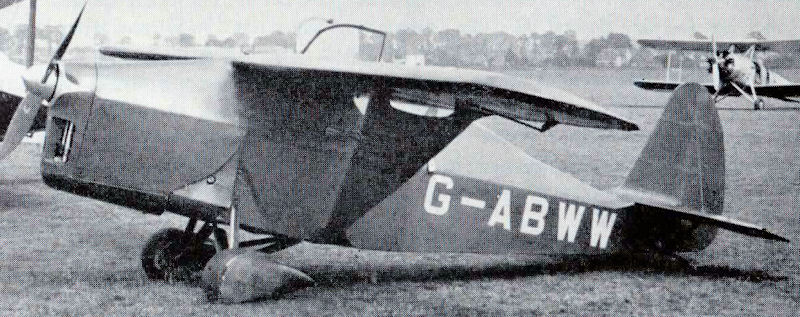
He also won the 1936 Portsmouth - Shoreham - Portsmouth race, averaging 126mph, in his Comper Swift (presumably the very lovely G-ABWE, although he later owned the Gipsy-engined [and therefore plug-ugly, imho] 'WW'):


   G ABWW AJJ

He modified 'WW in 1938 to have a hinged racing windscreen and a fairing between the wing bracing struts, which are visible here. Them fairings must have made the visibility even worse...

He married Enid Eileen Thirlwell in 1939, and they had a daughter in 1943.

Air Transport Auxiliary in WWII - see https://www.ata-ferry-pilots.org/index.php/category-blog-1940/102-lowe-stanley

 d. 1993; Enid d. 2002.


Details
Hits: 3085
  Mr Carill Stanley Napier

   1937, aged 30


b. 29 Apr 1907 From Putney, London

Son of the famous engine-maker Montague; an apprentice with Westlands in 1929. 'his one recreation apart from flying is the commendable indoor sport of darts. Believes that air-racing is good fun only when taken not too seriously''

Killed in WWII: 29 April 1941, when a First Officer in the Air Transport Auxiliary; buried RAF Halton, Bucks.

see https://www.ata-ferry-pilots.org/index.php/category-blog-1939/53-napier-carill

Details
Hits: 3299
  Capt Edgar Wikner Percival

  1930, aged 32


Australian aeronautical genius who ended up in the USA and New Zealand, via Luton.

b. 23 Feb 1897 in Albury, N.S.W. In 1915, while training in England, he became only the third person on record to recover from a spin (supposedly, Fred Raynham [q.v.] was the first). He later wrote: "After that I found that spinning was great fun and spun a Bristol Scout the next day. Very much later, on the Western Front, I found a spin was a very speedy way of dropping on the enemy - especially through a handy cloud."

Designer, and pilot, of some of the finest racing and record-breaking aeroplanes of all time.

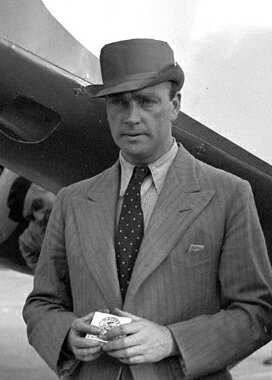
"He always flies his rakish Mew Gulls in a soft felt hat and tries to look as much unlike an intrepid birdman as possible, though he has never yet deceived the handicappers by this ruse." 

  King's Cup 1934; sans trilby, for once
Flight said he "has an uncanny navigational sense in thick weather, but sometimes flies pensively past his destination in 100-mile visibility".

Michael Madigan wrote: "It was very difficult to resist his puckish humour and not to fall under his spell... In his early flying days he had a fox-terrier called Ginger Mick. This dog always sat in the [open] rear cockpit tethered to a spar. One day as Edgar was preparing to land he went into a loop to lose height, forgetting about his passenger. After levelling off he heard strange scrabbling noises from the back and looking out saw Ginger Mick frantically dog-paddling in the air suspended by his lead. Edgar managed to manoevre Ginger back into the plane, and after landing he thought he would never see Ginger Mick again as he rushed off, but Ginger was as persistent an aviator as his master and reappeared, to settle in his place at start-up, large as life, and eager for more."

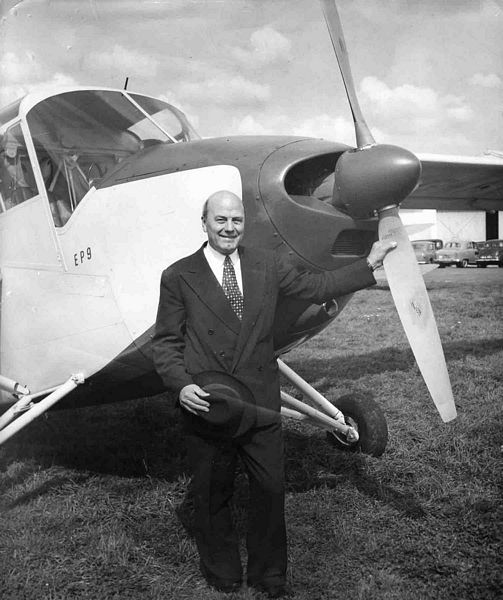
 In 1956, with the EP.9 'Prospector'. And trilby.

© The Royal Aero Club


d. 21 Jan 1984; his ashes were taken by the RAAF "to be scattered in the very field in Richmond, N.S.,W., where it all began."

"Edgar Percival had a strong character, a high mental and moral sense, and was a perfectionist - the qualities which made him successful. He was the dominant presence which compelled attention in a group. This dominance arose from his vast knowledge of aviation in all its aspects... all this and his strength of will did not make him an easy associate. He could see problems clearly, had the energy to solve them, and drove himself relentlessly, which made him rather intolerant of those less gifted."

(All quotes via Martin Barraclough, for which many thanks)


Details
Hits: 2973
  Mr Harold Lord 'Pip' Piper


photo: 1918, aged 20


photo: 1937, aged 39


Originally from New Zealand, a farmer.

He and Cyril Kay flew a Desoutter from England to Australia in 1930; later chief test pilot for Shorts, until 1948.

"Apart from flying, Pip's other passions in life are duck shooting, guns and boats."

Lankester Parker and Harold Piper [0122-0101]  (r), with Lankester Parker. © The Royal Aero Club
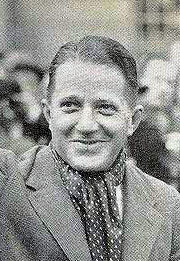
d. 1965


Details
Hits: 4180
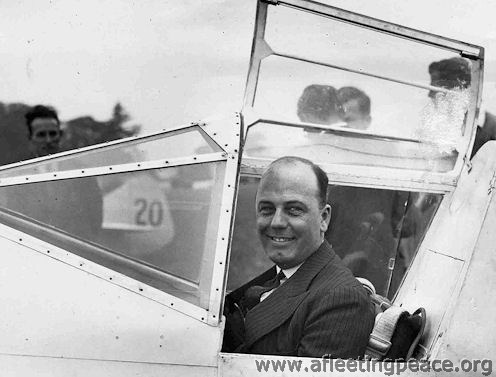
  Flt-Lt Thomas 'Tommy' Rose DFC

 afp tommy rose 1936 2 1936


b. 27 Jan 1895 - Alton, Hants

One of the best-known racing and pioneering pilots of the 30s.

His father, John, was a farm bailiff at Basing Farm, Froxfield, nr Petersfield, Hants. After working briefly as a bank clerk, Tommy joined the Royal Navy in 1914 and then transferred to the R.F.C. in June 1917.

"He was shot down three times, but escaped each time. He was awarded the DFC for his work with the fighter squadron in which Billy Bishop, VC, served. "

 m. 1925 Margaret Elizabeth [Ashford], [divorced 1938]

Retired from the RAF in 1926 with the rank of Flight-Lieutenant.

In December 1931, he made an unsuccessful attempt on the UK-Cape record, and then flew back "by easy stages".

 From Oct 1933, Manager and Chief Instructor at Sywell.

 "TOMMY ROSE is gone from Sywell, but not forgotten. As sales manager for Messrs. Phillips and Powis, the Reading aircraft manufacturers, he spends quite a lot of time flying round the country. Last week his photograph was 'splashed' in all the national daily papers, greeting Mr. H. L. Brook, the Yorkshireman airman, on his arrival at Croydon after breaking the Australia-England record previously held by Jim Mollison. There was no mistaking Tommy’s famous sports jacket and boyish grin!

Mr. Rose, the way, left a last impression at Sywell. Shortly before leaving, when the new gate was being erected in front of the clubhouse, he carefully placed his foot in the wet cement and printed beside it 'Tom Rose' with a trowel. The cement hardened, and the 'Rose' mark is there for posterity to reverence! Hundreds of feet have since trod the hallowed spot." - Northampton Mercury, 12 April 1935

Competed in the King's Cup six times, winning it in 1935 ...

Kings Cup 1938 Tommy Rose [0122-0170]

© The Royal Aero Club [0122-0170]

... and coming second in 1934 and 1936.

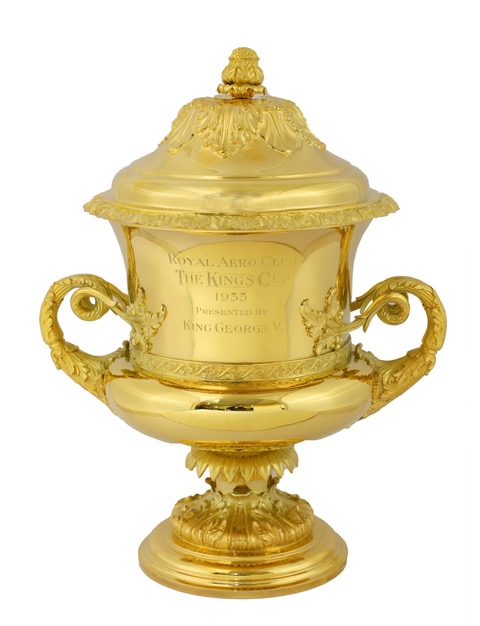
 [The 1935 King's Cup itself recently sold at auction for £3,900:

1935 kings Cup 3

Photo kindly supplied by Sarah Chambers, reproduced by kind permission of Sworders Fine Art Auctioneers.]

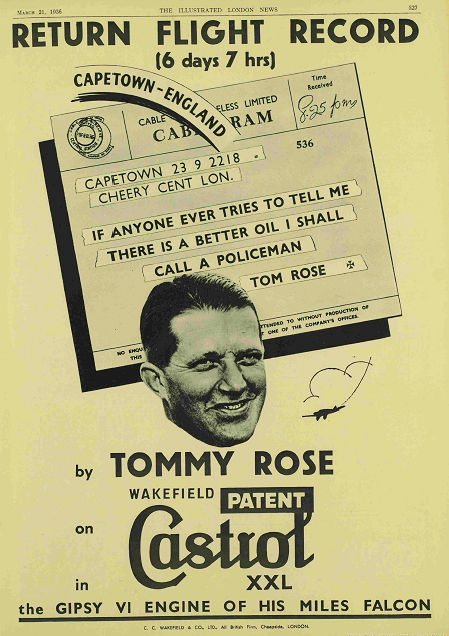
He became a national hero in March 1936 after his flight to Cape Town and back; "he can now claim to have made the fastest time for the trip both out and home. His new record is 6 days 6 hr. 57 min. (he got to the Cape in 89 hr. 37 min.), which beats F/O David Llewellyn's time—the previous best—by 5 hr. 6 min."

tommy rose advert 1936

After the flight to the Cape, he had tea with the Prime Minister, General Hcrtzog, and also saw General Smuts. However, he was charmingly modest about his achievements:

"TOMMY ROSE ON LONG FLIGHTS

SAYS RECORD ATTEMPTS ARE 'LARGELY BUNKUM'

This flight business is bunkum! The authority for that picturesquely phrased piece of information is Flight- Lieutenant Tommy Rose, and he should know, for he hit the headlines in all the national newspapers when he smashed all records for the flight from London to the Cape. In a talk to the Round Table at Stewart's Cafe on Monday he summed up the whole business in these few words: 'All long distance flights are largely bunkum. The national newspapers, if there is no other news at the time, whip up an interest in these flights, and if one gets there safely and breaks a record everyone thinks: 'By gad, here's one of the twelve apostles come to life!’ (Laughter.)

'But I assure you there is nothing in it. The only things you have got do to be successful are to get the best machine you can find and then practise sitting still for a long, long time . . . . '

Reflections wise and witty on flying in general and his own flight in particular made Flight-Lieutenant Rose's talk one of the most delightful and amusing to which Tablers have listened to for a long time. His racy manner produced a laugh at almost every sentence, and a more unassuming world record breaker than this genial young man would be difficult to find.

There was one richly humorous story which is worth repeating. 'When I eventually got to the Cape I had to broadcast to the Union,' he said. 'The announcer seemed very nervous and this was what he said: ’Who do you think I have here the studio? None other than Mr Tom Mollison, who flew from London to the Cape in 37 days 18 hours.’ I met General Hertzog few days later and he said: 'if it takes all that time to fly, don't you think you had better come by boat next time?’

Flight-Lieutenant Rose answered a number of questions and urged the need for municipalities laying down landing grounds for aircraft. Members of the Rotary Club and of other Round Tables were present, as guests, to hear the airman’s talk. " - Eastbourne Gazette, 6 May 1936

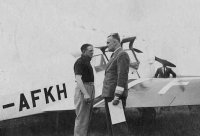
G-AFKH BA Eagle 2 Tommy Rose

© The Royal Aero Club [0129-0039]

Before the 1936 Schlesinger Race to Johannesburg, he predicted: "It is my opinion that the pilot of the aeroplane which gets there in under forty-eight hours will deserve just about the biggest bunch of bananas ever found.

Having got lost myself many times down this route when flying without wireless, I fully expect to do so again, and the pilot in this race who can honestly say at the end that he was sure of his position all the time will either be very lucky, very clever, or have a queer idea of honesty."

From 1939 to 1946, Chief Test Pilot for Miles Aircraft, living in Sonning, Berks;  in July 1943 he was reported to have "improved considerably and to be well on the way to recovery, after he contracted a chill when captaining his works cricket team. "

 Won the Manx Air Derby in 1947, still flying a Miles Hawk;  three circuits of the island at 181 mph.

d. 20 Jun 1968 - Alderney, Channel Islands.


Details
Hits: 3101
  Mr Derek Shuldham Schreiber

  1929, when an Army officer (11th Hussars), aged 25


'From Suffolk. Enjoys polo, hunting, shooting and other sports'.

Later a Brigadier:


Brigadier Derek Schreiber, Chief of Staff to the Governor General and Viscountess Clive, Lady in Waiting to the Duchess of Gloucester leaving St. John's Church after their wedding, Canberra, 24 October 1945 - Trove

 d. 1972 and is buried in Marlesford, Suffolk.


Details
Hits: 3638
  Capt Thomas Neville Stack

  1934, aged 38


RAeC [0312-0087]

 b. 1 April 1896; universally known as 'Stacko'

RFC in WWI, then became a familiar figure in aviation circles during the 1920s - in 1926 he and Bernard Leete made the first flight from England to India in two DH. Moths, one of several record-breaking flights.

He and J R Chaplin tried to fly to Australia and back in 1931, but had to turn back at Constantinople, Turkey, with carburettor trouble; later in the year the same pair attempted a flight to India and back, but again turned back with mechanical problems.

He was appointed 'Air Superintendent' of Iraq Airwork Ltd in 1933, and flew their first machine (a Spartan Cruiser) there via Cairo in 1933. Shortly afterwards, he flew 2 doctors and a nurse out to India, to perform an urgent operation on a Nepalese princess.

Late 1933 found him testing the Airspeed Courier - which is probably where he met Sydney Turner - and was widely expected to fly it in the MacRobertson Race. A month before the race, he broke (his own) London-Copenhagen record in a Miles Hawk, which is perhaps why he was too busy to inspect the Viceroy properly....

He turned up for the MacRobertson Race looking very tired and drawn - Alan Goodfellow described him as looking 'over-trained, physically', and Neville Shute Norway said he was "an exhausted and a worried man".

Shortly after the race, he was appointed Air Superintendent and Manager of Hillman's Airways; after that became part of British Airways he spent time in Turkey, advising them on civil aviation.

He was killed when run over by a lorry in Karachi, India on  22nd February 1949, aged 52. At first, the Karachi Police said he had committed suicide but, while agreeing that he was 'on the verge of a nervous breakdown', the inquiry decided that the cause of death was actually an aneurism of the aorta, and he would have died anyway.

Neville was "always very good company. He was never happier than when singing a song and strumming on his banjo."


Details
Hits: 2917
  Wing-Cmdr Frederick William Stent

 ' 1915, when a 2nd Lieutenant, RAC, aged 25

 September 1937, aged 47
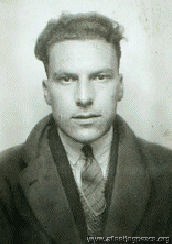
 A retired RAF officer'.

d. 28 Jun 1938 in the Miles M.11C (G-AEYI) which crashed at Harefield, Berkshire.


Details
Hits: 2902
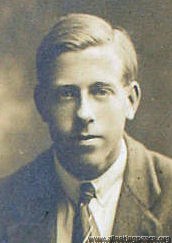
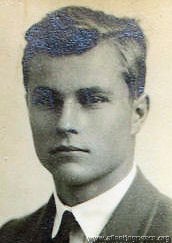
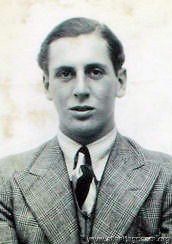
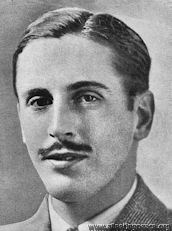
  Mr Robert John 'Bob' Waight

  1932, aged 23


Joined de Havilland at Hatfield in 1928 and was their chief test pilot from 1935; killed flying the TK4 at Hatfield in October 1937.

Hatfield later turned into an industrial estate (sigh) and Waight Close is named after him.


Details
Hits: 3315
  Mr Kenneth Herbert Fraser 'Ken' Waller

  1930, aged 22

 mFA_waller.jpg

b. 7 April 1908, in Lambeth, London

As you can see, he was over 6ft 4in in height. Despite this, learnt to fly in Kent, got his aviator's certificate in 1930 and then became an instructor at Brooklands in Surrey.

Pilot, with Owen Cathcart Jones, of one of the D.H. Comets for the MacRobertson Race in 1934; given third prize (erroneously, in my view, but it's probably a bit late to say that now).

In 1935, got annoyed with Owen Cathcart Jones for something he said in his book that Ken felt "reflected on his courage and ability as a pilot", and even went to court over it. Owen replied that "that was the last thing he intended, as Mr. Waller and he had been, and still were, very good friends", which seemed to settle the matter.

He and Max Findlay competed in the Schlesinger Race to South Africa in 1936, in an Airspeed Envoy (No 13), but this crashed on take-off in Northern Rhodesia, killing Findlay and the radio operator; Ken was thrown out through a hole in the fuselage and badly hurt.

After WWII, became Miles Aircraft's chief test pilot (he delivered a Hillman Minx car to Orkney in 1948 at a cost of £35, you may remember). 


Details
Hits: 2908
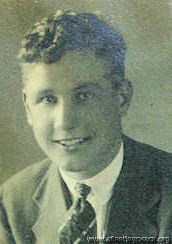
  Mr Charles Henry Willis

  1933, when a bank clerk, aged 24


'Assistant instructor to the Insurance Flying Club'