- Details
- Hits: 2593
Flights to and from South Africa
The "All-British" air route between Cairo and the Cape was first opened for traffic in 1920. They could do this because, thanks to Cecil Rhodes and his fellow empire-builders, the map was coloured pink all the way, [denoting, of course, that they were part of the British Empire]
Some of the 44 aerodromes established for the 1920 'all-red' Route (with present-day country names], click to enlarge The route had been first surveyed in 1918, when 3 military parties were instructed to explore and, as far as possible, prepare the route. They worked with the local authorities and cut many of the aerodromes out of the dense jungle, felling thousands of trees - and relocating tens of thousands of tons of soil - in the process. This is what they achieved:
Pretty soon, people were queueing up to use this new route. Here are the successful flights, and some notable brave attempts: |
|||||||||||||||||||||||||||||||||||||||||||||||||||||||||||||||||||||||||||||||||||||||||||||||||||||||||||||||||||||||||||||||||||||||||||||||||||||||||||||||||||||

- Details
- Hits: 2283
|
1920
Capt Stanley Cockerell and Capt Frank Crossley Griffiths Broome (pilots), Dr Chalmers Mitchell (Secretary of the Zoological Society) and two mechanics in a Vickers Vimy Commercial [K-107, G-EAAV]. On February 27 the starboard engine failed just as the machine had reached flying speed in taking-off from Tabora, Tanganyika. The aeroplane crashed, settled on an anthill and almost turned over, the undercarriage being forced through the lower wing. Capt. Cockerell's wrist was sprained and Mr. Corby's leg was bruised, but otherwise the occupants of the machine escaped injury. The framework and cabin of the wrecked Vimy were taken over by the Tabora Sporting Club "for use as a pavilion", but the engines were sent back to England. |
|
- Details
- Hits: 2323
|
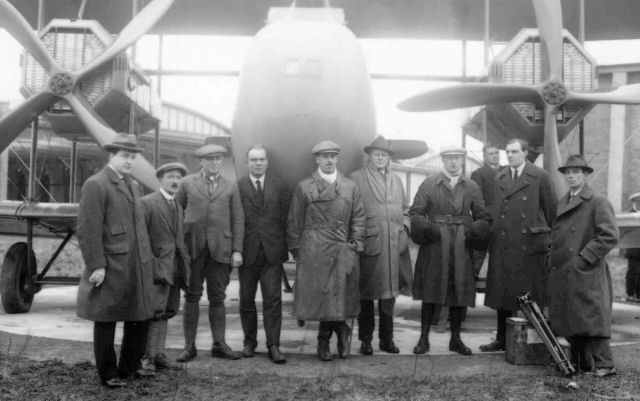
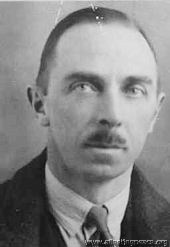
1920 Maj Herbert George Brackley and Lt Frederick Tymms in a Handley Page 0/400 (D4624, G-EAMC) This machine, which left Assuan on February 25, made a forced landing at El Shereik, Sudan, about two-thirds of the way to Khartoum. The machine was damaged beyond repair, but fortunately no one was hurt. |
Air Commodore H. G. Brackley C.B.E., D.S.O., D.S.C., F.R.G.S., A.F.R.Ae.S., b. 4 Oct 1894, later Air Superintendent of Imperial Airways, was drowned while sea-bathing near Rio de Janeiro in the autumn of 1948. He was chief executive of British South American Airways at the time.
1930 Sir Frederick Tymms, MC, was a well-known navigator and civil servant who joined the RFC in 1917 and subsequently worked for the Air Ministry as Superintendent of Civil Aviation in the Middle East and India. |
|
|
- Details
- Hits: 2328
|
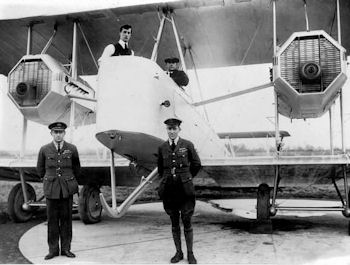
1920 Flt-Lt Christopher Joseph Quintin Brand and Lt-Col Pierre van Ryneveld, in: 1) a Vickers FB.27 Vimy 'G-UABA, The Silver Queen', which they crashed in Korosko, Egypt on the 11th February; 2) another borrowed Vimy 'F8615, The Silver Queen II', and finally (when they damaged that); 3) a borrowed RAF Airco D.H.9 (H5648, 'Voor-trekker' ('Pioneer')). Left Brooklands 4 Feb 1920, landed Cape Town 4pm 20 March. 45 days. First journey by air from Cairo to the Cape. |
Silver Queen I |
- Details
- Hits: 2385
|
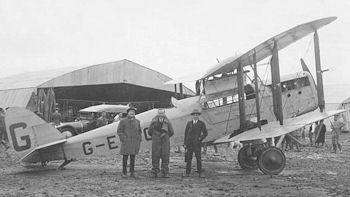
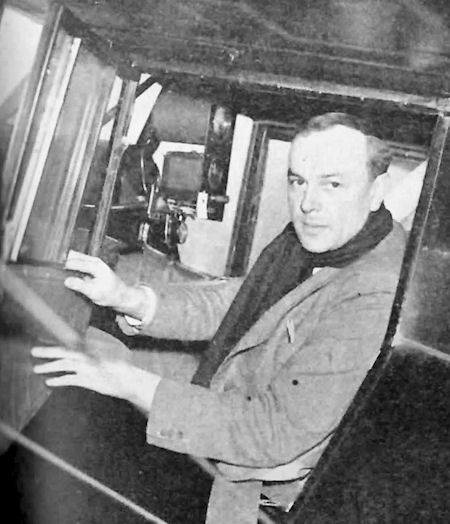
1925-6 The London-Capetown-London Imperial Airways Survey Flight Alan C Cobham, with Arthur B. Elliott as engineer and B. W. G. Emmott as cinematographer in a D.H. 50J. Set out from Croydon on November 16, reached Cape Town on the evening of February 17, and returned to London 20 Mar 1926 |
 |
- Details
- Hits: 2470
|
1926
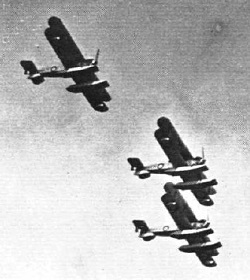
The First RAF Cape Flight Wing Commander C. W. H. Pulford (commanding the flight), with Flt-Lt P.H. Mackworth, Flt-Lt E.J. Linton Hope, F/O W. L.Payne, Flight-Lieut. L.E.M. Gillman (navigator), Flying Officer A.A. Jones (technical), Sgt Hartley (fitter), and Sgt Gardener (rigger). "They have carried out a flight which is unique in many ways and useful in many ways, and they have done credit to the Royal Air Force and to the British Empire.... there has been no other instance on record of a formation of four aeroplanes flying over 14,000 miles, across two continents, from the northern temperate zone to the southern temperate zone and back without change of personnel, of aircraft, or of engines." |
|
|
Conway Waller Heath Pulford, O.B.E., A.F.C., Croix de Guerre, was born in India on January 26, 1892, and joined the Navy as a midshipman in January 1910. He transferred to the R.N.A.S. as a Flight Lieutenant and then to the RAF in August 1, 1919 as a Squadron Leader. Later promoted to Air Vice Marshal. He was killed in WWII; 10 Mar 1942 when he and his naval counterpart, Rear Admiral Spooner, were amongst the last to leave Indonesia when the Japanese overran it. Their motor boat was hit and forced to run aground on an uninhabited, malaria-infested island called Chibia. The survivors managed to hold out for two months before being forced to surrender to the Japanese, but Pulford and Spooner had both died of exhaustion and malaria. |
- Details
- Hits: 2382
|
1927-8 The Sir Charles Wakefield African survey expedition Sir Alan Cobham in the Short S.5 Singapore flying-boat N-179 G-EBUP. Started from Rochester on November 17. The flying-boat landed on Lake Victoria on February 5; it was the first flying boat to do so. They completed the outward journey from England to Cape Town on March 30. The return journey up the West African Coast was started on April 3. |
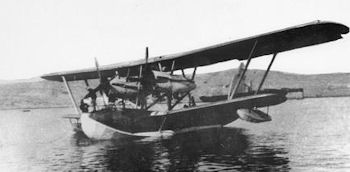 |
- Details
- Hits: 2290
|
1927 The Second RAF Cape Flight The Cairo-Cape flight ended on April 21, when the R.A.F. machines, under the command of Air-Commodore C. R. Samson, arrived at Cape Town about noon, 22 days after leaving Cairo.
C. R. Samson C.M.G., D.S.O. (and Bar), A.F.C., was a picturesque figure, who captured the popular imagination, "chiefly because of his wholehearted love of fighting and adventure." He published an account of this flight in his book called (as you might rather expect), "A Flight from Cairo to Capetown and Back". d. Feb 1931, aged 47 |
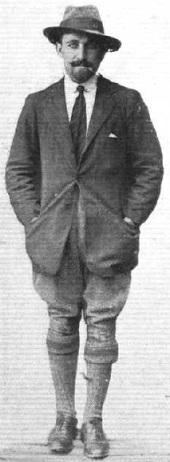 |
- Details
- Hits: 2558
|
1927-8 Flt-Lt Richard 'Dick' Read Bentley, S.A.A.F in D.H. Moth 60X G-EBSO 'Dorys' 'Dick' was a South African Air Force instructor at Roberts Heights, the headquarters of the S.A.A.F.; he was an adopted South African, born in England. He had also spent about three years in Canada. Lady Bailey christened the Moth at Stag Lane with the name of 'Dorys', after his then-fiancee. The movie is here, although they seem to think the aeroplane was called the 'Johannesburg Star'... The aeroplane was a standard production model, the only change being an extra fuel tank instead of the passenger's seat. He was awarded the Britannia Trophy for the most meritorious performance of the year. First solo England-Cape Town flight. Left Stag Lane 10:30 am September 1. Arrived 2:20pm September 28. He then became the first pilot to fly to Cape Town from England and back in a light aeroplane; the return flight was his "admirable method of spending a honeymoon". Left Cape Town March 3, arrived Croydon (with his new wife, Dorys) on May 12. He then became instructor to the Liverpool and District Aero Club from June to September. |
Lady Bailey christens Dorys, with Dick in the background |
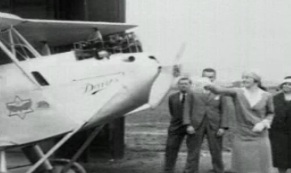
- Details
- Hits: 2203
| <<< | |
|
1928 First solo light plane flight from Cape Town to England Lady Heath in an Avro Avian III Reached Cape Town (by sea) December 6, 1927 She also enlisted the help of Dick Bentley to fly over the Sudan. Left Pretoria on February 25, reached Croydon May 17. The aeroplane was later sold to Amelia Earhart, and taken to America. |
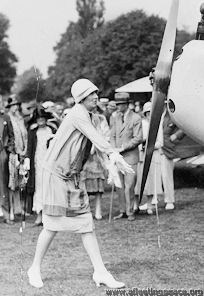 |
- Details
- Hits: 2251
|
1928-9
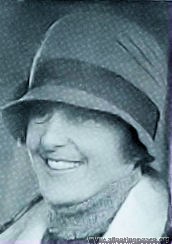
Lady Bailey in a couple of DH Moths She only took two small suit-cases with her when she took off, in March 1928. In Cairo, her plane was locked away by order of the Governor-General of the Sudan to prevent her from continuing alone, so she contacted Dick Bentley (who had flown to the Cape a few weeks before) to escort her in his own aeroplane over the "dangerous area of the southern Sudan". She then crashed in Tanganyika, writing off her aeroplane (she said it was her fault), but her husband Abe made arrangements for a replacement Moth to be delivered from Pretoria and she continued, despite having 'flu. Abe was there to meet her when she arrived at the end of April. The return journey was made via the western 'French' route - the Belgian Congo, Angola and the French Congo. She finally arrived back at Croydon on 16 January, 1929, 10 months after she left. It was "undoubtedly one of the finest performances ever put up by a woman pilot." |
L |
- Details
- Hits: 2226
|
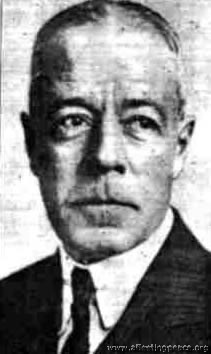
1928 An American attempt Van Lear Black, (the publisher of the Baltimore Sun), in a Fokker tri-motor monoplane, left Croydon on May 14th and reached Khartoum on the 19th, but had engine trouble and abandoned the attempt. |
 |
- Details
- Hits: 2209
|
1928 Record flight Lieut. Pat Murdoch, SAAF, in an Avro Avian III G-EBVU Started from Croydon at 5 p.m. on July 29 Time: 14 days. "We understand that before his departure Lieut. Murdock consulted Sir Alan Cobham regarding the flight." Took off September 12 to make his way back, but crashed at Elizabethville, Belgian Congo, on October 18; he was uninjured, but wrote off the aeroplane. |
- Details
- Hits: 2189
|
1928
Capt Stanley Halse, accompanied by his wife, left Stag Lane on September 10 in a D.H. Gipsy Moth, was held up at Mongalla with a broken airscrew, and then made a forced landing at Atbara with engine trouble. |
- Details
- Hits: 2220
|
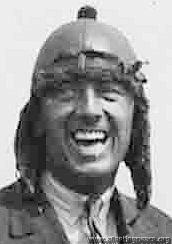
1928 London-Cape Town Flight Capt Wally Hope reached Khartum on October 1. He was delayed by a touch of sunstroke. |
 |
- Details
- Hits: 2212
|
1928 "Mr John Carberry left Croydon in his Fokker monoplane on November 18 for Cape Town. He was accompanied by a mechanic and hopes to make the flight in record time. It is the intention of Mr. Carberry to continue this flight to his estates in the Kenya Colony after reaching the Cape." "Lady Carbery, the wife of Lord Carbery, was killed whilst flying her D.H.Moth at Nairobi, Kenya Colony, on March 12. During the afternoon she had taken friends for flights, and in the evening Mr. Cowie accompanied her to take instruction. The machine was seen to lose flying speed,and before it crashed Lady Carbery jumped out, but was instantly killed. Mr. Cowie was also killed. Lord Carbery was a witness of the disaster." |
- Details
- Hits: 2270
|
1929 The 4th RAF Flight "For four successive years, four Fairey aircraft, each fitted with a Napier engine, have been selected for the service flight from Cairo to Cape Town and back. No mechanical trouble has been experienced on these flights." |
- Details
- Hits: 2399
|
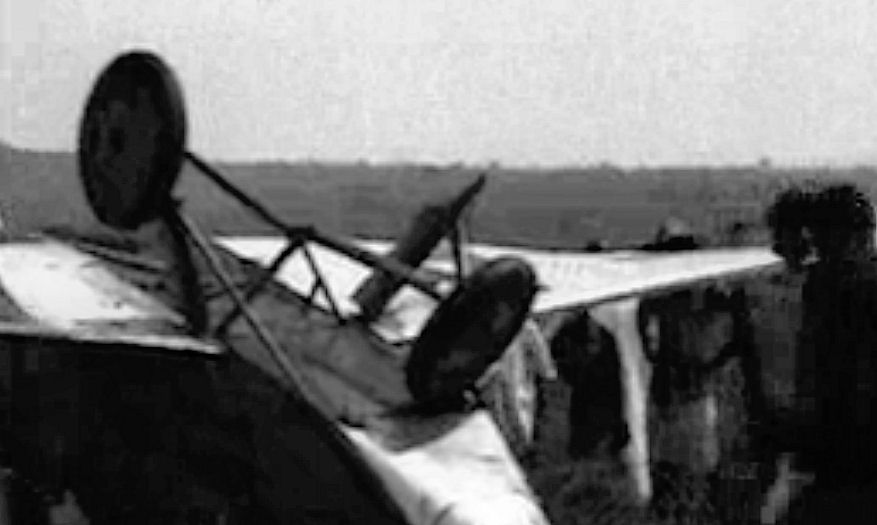
1929-30 Roy Tuckett, a member of the Port Elizabeth Light Aeroplane Club. D.H. 60G Gipsy Moth G-AARW Left Croydon 9 November, 1929. Met with a mishap at Aboukir when the machine was wrecked after being accidentally started. Mr. Tuckett himself was laid out for some time, but was apparently not permanently incapacitated. Later, crashed while taking off at Toroso, Kenya. |
|||
 |
 |
 |
|
- Details
- Hits: 2216
|
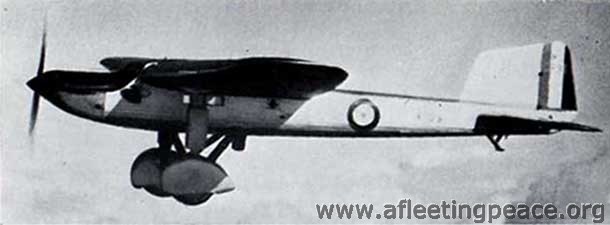
1929 The Long-Distance Flight Disaster Sqn-Ldr Arthur Gordon Jones-Williams, Flt-Lt N H Jenkins in the first Fairey Long-Distance Monoplane This attempt on the world long-distance record took off on 16 December 1929 but crashed south of Tunis, destroying the aircraft and killing the crew. |
 |
- Details
- Hits: 2202
|
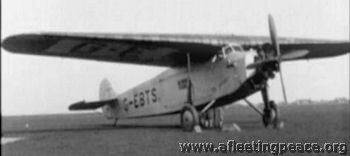
1930 The Duchess of Bedford's record flight The (64-year-old) Duchess of Bedford, Capt. Charles D. Barnard (pilot) and Mr. R. Little in her Fokker monoplane G-EBTS 'The Spider'. Left Lympne on April 10, reached Cape Town on April 19. 10 days. |
|
 |
 |
- Details
- Hits: 1789
|
1930 A New Record Rhinie Frederick Caspareuthus in a D.H. "Puss Moth" belonging to Mr. Marshall, of Port Elizabeth. An ex-RAF South African, he made the journey in the record time of 9½ days. Left Croydon on October 5; arrived Maitland Aerodrome, Cape Town, on October 13, an hour before he was expected. Total flying time 78 hours. He said afterwards that he had been forced down by storms to a few hundred feet at Beauvais shortly after the disaster to R 101, but saw no signs of it. He later flew for Imperial Airways. |
- Details
- Hits: 1785
|
1930 "Miss Winifred Spooner, who with F./O. E.C.T. Edwards made a forced descent in the sea at Belmonte during an attempt to fly to the Cape in record time, arrived back in London on December 20. She had intended to fly home from Paris, but fog prevented this, so she made the journey by boat and train. F./O. Edwards flew back from Paris to Hendon on December 22." |
- Details
- Hits: 1758
|
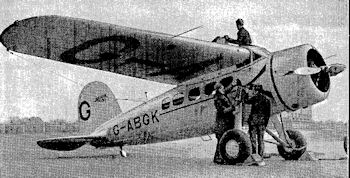
1931 The "Blazing the Mail" flight - another record Lt-Cmdr Glen Kidston and Lt. Owen Cathcart Jones, with L. A. Valletti (wireless operator) (replaced by L. Johnson for the second half of the flight) in Lockheed Vega G-ABGK. Time: 6 days 10 hours Left Netheravon, Wilts at 6a.m. on the 31 Mar. Delayed by a forced landing near Lichtenburg (Pretoria), but arrived 5.30p.m. 6 April. Total flying time 57hr 10min. Imperial Airways (who had not even taken delivery of their already-obsolete H.P. 42 biplanes), regarded the flight as a 'stunt', bearing no relation to a "proper" commercial operation. At the time, it was the quickest delivery ever made of a London newspaper (The Times) to Johannesburg, and 'created much interest in the city'. |
Glen's Vega, which was an 'Also Ran' in the 1934 MacRobertson Race. |
- Details
- Hits: 1818
|
1931 Peggy's Brief Moment Miss Peggy Salaman and Mr. Gordon Store, in her DH.80A Puss Moth G-ABEH And two lion cubs... Left Croydon October 31 Total Time: 5d 6hr 40 min., beating Kidston's record by about 28 hr. Their total flying time was 64 hr., Kidston's being 56 hr. The aircraft (the only one she ever owned) was sold in Kenya in 1933, and survived until 1948. |
 |
- Details
- Hits: 1826
|
APRIL 1, 1932
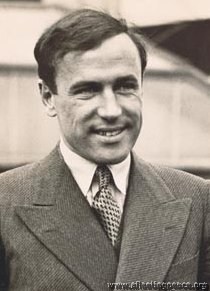
"England—Cape Town In 4d 17hr 30min Mollison Realises his Ambition Gradually the aeroplane is bringing the parts of the British Empire closer together, mentally no less than physically. By his flight Mr. J. A. Mollison has brought Capetown within 113hr. 22 min. of London, and, although this was achieved at the cost of terrific strain on the pilot, the flight has once again demonstrated to the world the qualities of British aircraft and British aero engines." |
- Details
- Hits: 1789
|
1932
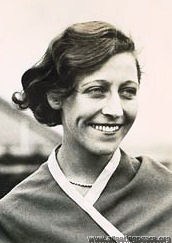
Mrs. Amy Mollison in her " Puss Moth "Desert Cloud" ALTHOUGH Mrs. J. A. Mollison was unable to beat her own record, for the England-Cape flight, on her return journey, she has succeeded in breaking the previous record (9.5 days, established by Capt. C. D. Barnard and the Duchess of Bedford) by about two days. She has also shown, by the splendid effort on this last flight, in which she had to fight against most unfavourable weather conditions throughout, that she undoubtedly ranks foremost amongst long-distance pilots. She flew from England to Cape Town in 4d 6hr 54 min., thus beating her husband's previous record for the same journey. Amy's time for the homeward flight was 7d 7hr 25 minutes; she left Capetown at 5 a.m. (G.M.T.) on December 11, landing at Croydon on December 18. |
- Details
- Hits: 1819
|
1933
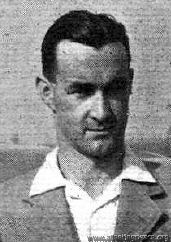
Mr. Smith's Flight MR. VICTOR SMITH, the 19-year-old South African airman, who left Capetown on November 13, arrived at Croydon on the evening of November 24. Mr. Smith's flight may not have been record breaking, but it was not without interest and excitement. After he had left the Niger River to fly by compass to Gao, Mr. Smith suddenly found that a petrol feed pipe was leaking, and instead of having about 25 gall, he only had left sufficient fuel for about 10 min. flying. He force-landed near a pool of water and received hospitality, such as it was, from members of the Tuareg tribe.
|
- Details
- Hits: 1745
|
1935
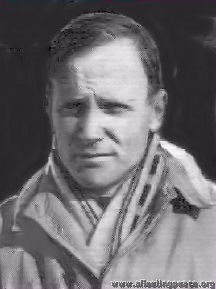
Brook's Bad Luck Mr. H. L. Brook, who was attempting to beat the England-Cape record in a Miles "Falcon," had a mild crash while landing after dark at Mersa Matruh, about 260 miles E.N.E. of Cairo. He was uninjured and will probably carry on to Cape Town in easy stages preparatory to making a fast return flight.
|
- Details
- Hits: 1825
|
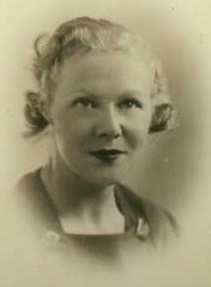
1935 David Llewellyn, flying instructor at Hanworth, and his one-time pupil, Mrs. Jill Wyndham, who, in a Parnall Heck, are out to break the London-Cape record, have made a forced landing between Aboukir and Cairo. On their previous attempt they turned back at Marseilles. They eventually got there in 6d 8hr 28min. |
- Details
- Hits: 1861
|
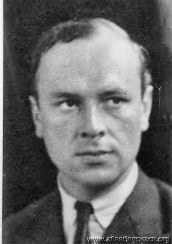
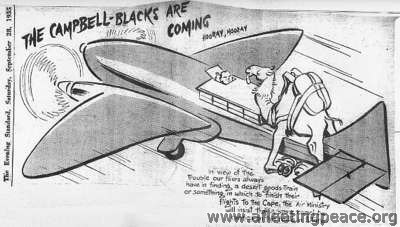
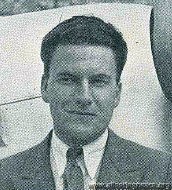
1935 UNLUCKY AGAIN Tom Campbell Black and his co-pilot Mr. J. G. McArthur had a second slice of ill-luck in connection with their Cape Town-and-back record attempt. At the same time, they must be congratulated on a very fortunate escape. It will be remembered that in the middle of last month they set out in Mr. Cyril Nicholson's D.H. Comet Boomerang, but were forced to return after experiencing a shortage of oil due to a curious error in the making of the dip-sticks of the oil tanks. Last Saturday they made a renewed attempt. Weather reports proving favourable, they left Hatfield aerodrome at 4 p.m., the Comet making a remarkably short and clean takeoff in spite of its heavy fuel load and an almost entire absence of wind. They flew non-stop to Cairo, which they reached in 11 hr. 9 min.—bettering their previous time—then refuelled before taking off for Kisumu, Kenya. They were last seen flying over Wadi Haifa, then nothing more was heard of them for twenty hours, and a good deal of anxiety was felt. It was not relieved until they suddenly and surprisingly appeared at 2 p.m. on Monday at Kubushia, near Khartoum, riding camels. It was then learned that the Comet had crashed and caught fire in the desert 100 miles north of Khartoum, and that the crew had escaped by parachute.
|
- Details
- Hits: 1861
|
1936
BACK and FORTH Rose (Falcon) and Llewellyn (Aeronca) Fly Respectively From and To South Africa THE Cape-England record has been broken by Fit. Lt. Tommy Rose, who can now claim to have made the fastest time for the trip both out and home. His new record is 6 days 6 hr. 57 min. (he got to the Cape in 89hr. 37 min.), which beats F/O David Llewellyn's time—the previous best—by 5 hr. 6 min. Just to keep the pot boiling, Llewellyn has now flown to Johannesburg in an Aeronca with a J.A.P. engine of only 40 h.p. Rose, of course, was using the Miles Falcon. Left Capetown at 6.8 a.m. (G.M.T.) on Tuesday, March 3
|
- Details
- Hits: 1968
|
1937 From November 14 to 19 F /O Arthur Edmund Clouston and Mrs. Betty Kirby-Green made a fine return flight to the Cape in the D.H. Comet Burberry, taking outward (45 hr. 2 min.), homeward (57 hr. 23 min.) and return (5 days 17 hr. 28 min.) records. "The official world's record flight from England to the Cape is held by Miss Amy Johnson in 78 hours 25 minutes, and the return record by Mr. H. L. Brook, whose time was 96 hours 20 minutes ; these two are registered with the F.A.I, as Records de Parcours, or capital to capital records." |
||
|
D.H. Comet 'The Burberry'; G-ACSS, the Aeroplane Formerly Known As 'Grosvenor House' and 'The Orphan'. Currently at Shuttleworth |
 |
 |

- Details
- Hits: 1831
|
1939
HENSHAW'S CAPE DASH A Brilliant Solo Effort in a Racing Single-seater TO Alex Henshaw, winner of the 1938 King's Cup Race, goes the credit of having made one of the most spectacular long-distance dashes of recent years— from London to Cape Town and back in 106.5 hours. The outward trip of 6,000 miles he accomplished in 39hr. 25 min., and the homeward run took 39hr. 36 min. The out and home journey, including his rest period of 27 hours at Cape Town, was accomplished in 106hr. 1 min. He thus beats the record set up in November, 1937, by F/O. A. E. Clouston and Mrs. Kirby-Green (flying a D.H. Comet) by 5 hr. 37 min. outward; 17 hr. 47 min. homeward; and 30hr. 59 min. for the round trip. The best previous solo time, one way, was that of Miss Amy Johnson in 1936, with 78hr. 25 min. The machine, G-AEXF, was the familiar white one with which Henshaw won last year's King's Cup Race, and in which he has competed in a number of events during the last two years. It is by no means new. It had, however, been very considerably modified by Essex Aero, Ltd., specially for this attempt.
|
- Details
- Hits: 3071
The Aviators |
- Details
- Hits: 6114
|
Hon. Lady Mary Bailey Royal Aero Club Certificate No. 8067 (26 Jan 1927) |
|
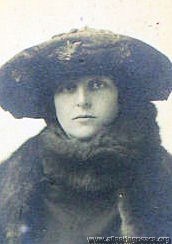 1927, aged 37 |
1930, aged 40 |
|
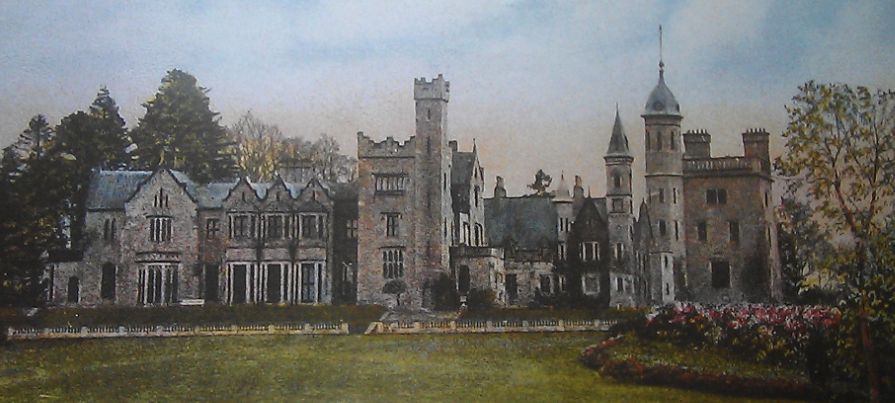
The Hon. Mary Westenra, b. 1 December 1890 in London but brought up mainly in County Monaghan, Ireland. Her family's home was Rossmore Castle, which was a grand affair built in the 1820s, with turrets, a vast drawing room and servants' quarters, not to mention about 20 cottages on the estate:
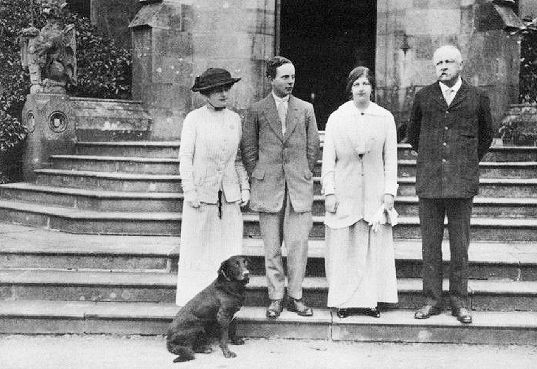
Here she is, with her brother Willie, and parents (Mittie and Derry) on a set of steps by the house, in 1913:
I visited County Monaghan in 2014 and asked in the local museum if they knew where the house was. 'Oh yes' they said, 'but it was demolished forty years ago'. It seems that it became severely infested with dry rot in the 1940s, was abandoned and, indeed, demolished in 1975. Anyway, here's all that's left of it now:
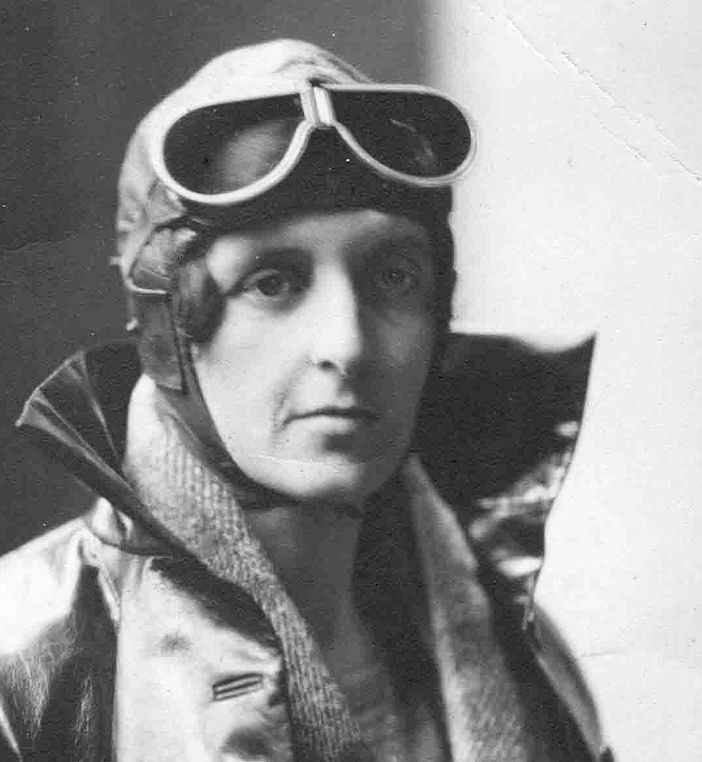
Mary married South African mining magnate and white suprematist politician Sir Abe Bailey in September 1911 (so, she was 21, he was nearly 47; his first wife had died in 1902 and he already had two children). They then had five more children - 2 boys and 3 girls. She learnt to fly at the London Aeroplane Club in 1926. She was the first woman to fly across the Irish Sea 'by the long route' from Chester to Dublin, the following August. The following March (1928) she began a solo tour to Cape Town, via Malta and then Cairo. Here, her plane was locked away by order of the Governor-General of the Sudan to prevent her from continuing alone, so she contacted Dick Bentley (who had flown to the Cape a few weeks before) to escort her in his own aeroplane over the "dangerous area of the southern Sudan". She then crashed in Tanganyika, writing off her aeroplane (she said it was her fault), but Abe made arrangements for a replacement Moth to be delivered from Pretoria and she continued, despite having 'flu. Abe was there to meet her when she arrived at the end of April. The return journey was made via the western 'French' route - the Belgian Congo, Angola and the French Congo. She finally arrived back at Croydon on 16 January, 1929, 10 months after she left. It was "undoubtedly one of the finest performances ever put up by a woman pilot." Lady Bailey was "so modest, so vague and so charming", and was "surprised that anyone should make a fuss about her journey". A Director of National Flying Services in 1929, (with Frederick Guest, Colonel the Master of Sempill, Alan Cobham, etc); she was also awarded the Brittania Trophy by the Royal Aero Club, and then made a Dame of the British Empire in 1930 for "services to aviation".
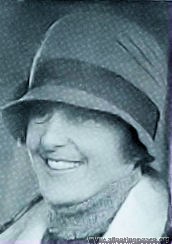
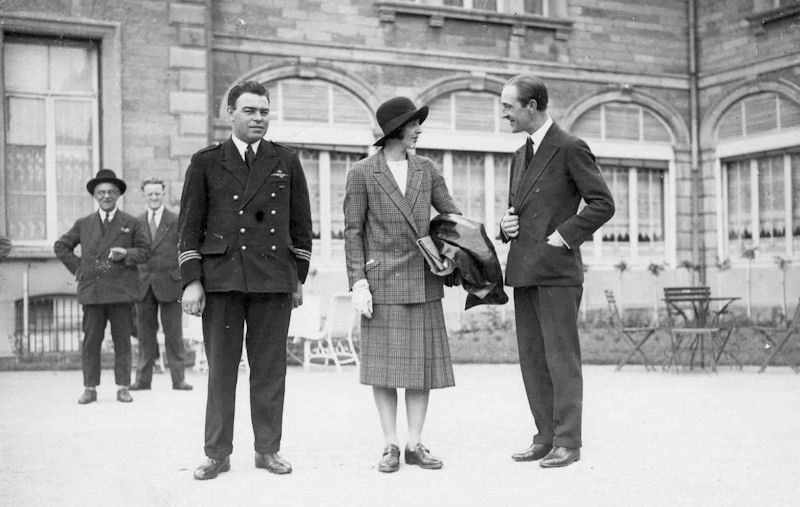
At the Chateau d'Ardennes in 1930
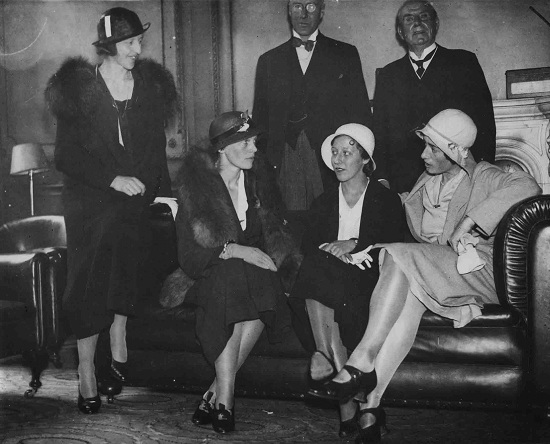
She was a guest at Amelia Earhart's reception at the Royal Aero Club in May 1932.
In early 1933 she gave everyone a scare by disappearing for several days on another solo flight to Cape Town; thankfully, she had only got lost, run low on fuel and landed safely in the Sahara. [Bert Hinkler, who disappeared at about the same time, was killed in the Alps]. She then flew back to England and almost immediately went down with a bout of typhoid, but recovered in time to compete in the King's Cup later in the year.
After that, she concentrated on looking after their horses, giving and attending loads more balls and receptions, and marrying off their many children. When Abe died in 1940, she settled near Cape Town (still keeping a house in Rutland) and died there 29th August 1960 aged 69.
Lady Mary's aeroplanes were: a 1926 DH.60 Moth (G-EBPU), a 1927 DH.60X Moth (G-EBSF, the one she crashed in Tanganyika), the replacement DH.60X Moth (G-EBTG, which Abe bought in Nairobi); a 1928 DH.60G Gipsy Moth (G-AABN); a 1929 DH.60G Gipsy Moth (G-AAEE) and a 1930 DH.80A Puss Moth, G-AAYA.
|
|
 www.monaghan.ie/museum
 Throttle Full Open
- Details
- Hits: 4889
|
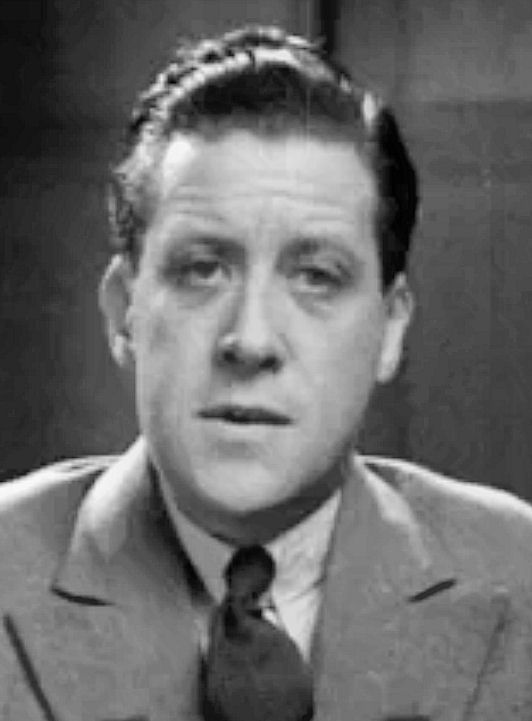
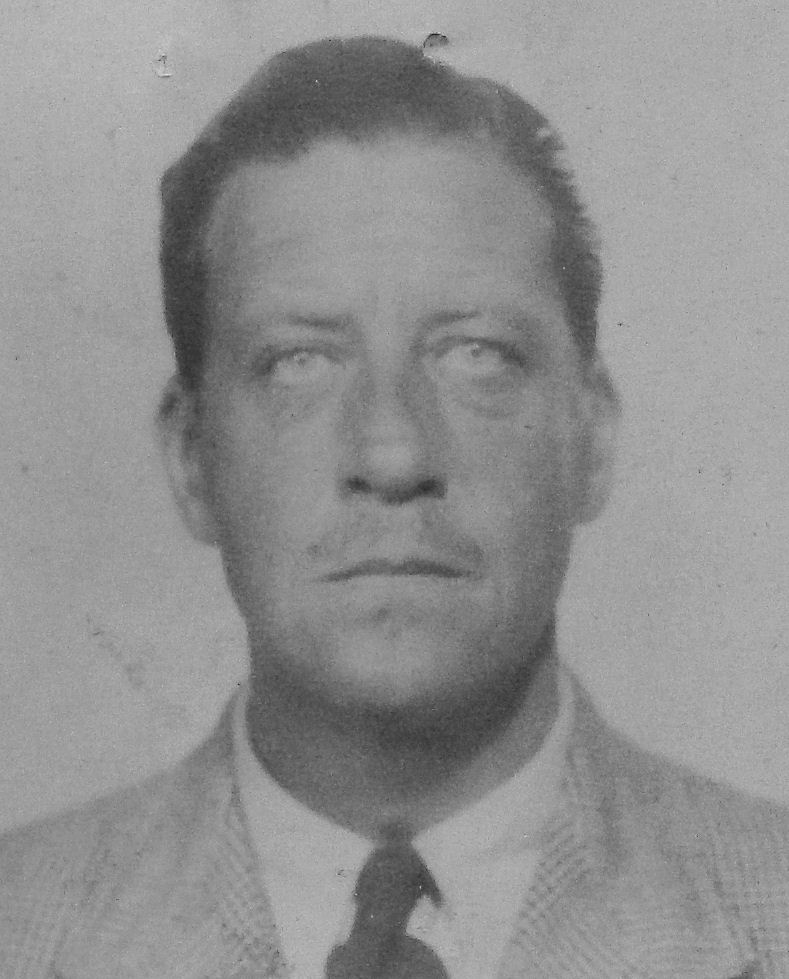
Capt Charles Douglas Barnard
|
||
|
Personal pilot to the Duchess of Bedford, 'ribald and golden-haired'. b. 8 Dec 1895 in London; his father, Charles Gilbert Barnard, was a master printer (and not related to Franklyn Barnard's father). He learnt to fly in 1915 with the RFC. After WWI, became a test pilot for Sopwith, then a pilot with the de Havilland Airplane Hire Service after meeting Alan Cobham, then their chief pilot, in Spain. In July 1920, he was convicted of manslaughter, for killing an elderly man in a car accident in which he failed to stop, and didn't report; "Charles Barnard (24), a demobilised airman from Watford whose machine was brought down in flames in France, was charged with the manslaughter of Alfred Sharp on the night of May 2, by knocking him down whilst driving a motor-car. A button, answering the description of other buttons from the deceased's coat, was found between the bonnet and mudguard of the accused's car. He was remanded, bail being refused." It also turned out that his driving licence had lapsed at the time, and he hadn't renewed it until some days after the accident. He was given 4 months imprisonment in the 'Second Division' (such prisoners were kept apart from other classes of prisoners, received more frequent letters and visits and wore clothes of a different colour). The Judge said there was "too much reckless driving by people who served in the war. Their war services were no consolation to bereaved relatives." Settling down a bit after that, he was the pilot in 1923 when an aeroplane belonging to the de Havilland Hire Service was used to ferry Commander Bristow to have a look at an Italian ship, the D'Aosta, which had become stranded in Malta. It was the first time the flight had been made, and it took over 14 hours, mainly (Charles complained) because the authorities in Pisa insisted on a deposit of 15% of the value of the machine. One of his other jobs for the de Havilland Hire Company was to fly G-EBGT 'Nulli Secundus', a perfectly good D.H.9c, while a certain Captain Spencer jumped out of it - see the video here.
His first long-distance flight with the Duchess of Bedford was a tour in 1927 from her home in Woburn Abbey to France, Spain and North Africa, covering 4,500 miles in 3 weeks. Two years later, he piloted her Fokker monoplane, the 'Spider' to India and back, 10,000 miles in 88.5 hours; the RAeC gave him their Gold Medal for the year. It wasn't their first attempt at the flight to India and back - a year before they had tried the same thing, but problems with the propellor meant that the Duchess had had to come back by steamer from Karachi (which at the time was in India, of course). In 1928, described as a 'flying man', he was cited as the co-respondent in a divorce case. At the time, he and Mrs Melita Erna May were living together at his place in Monmouth Rd, Bayswater; they got married in December. |
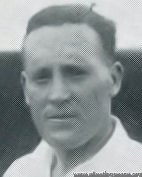 photo: 1930
- Details
- Hits: 3912
|
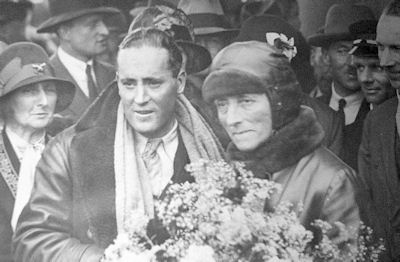
Richard Read Bentley
|
||
| b. 20 November 1897 in London
Dick described himself as "one who preferred to live in the open, rather than within the confines of a London office" - one who, luckily, found it possible to make his living mainly by aviation. His mother having died when he was 12 (he said "I did not then recognise that my father was a broken man due to the loss of my mother"), he and his father had to move from Sheen Gate Mansions to a boarding house in a less fashionable area of London. After a while in an office in a paper merchant's - which he hated - he was packed off to Canada; when he got there, he found that his father had also died. After a stint as a farm hand in Canada, he came back to England and joined the RFC in WWI (photographic reconnaisance with 59 Sqn, then a flying instructor at Hooton). Then,"I hung around in London trying to get a job without any luck, like hundreds of other demobs. As I didn’t want to return to Canada I decided to try Rhodesia." He soon fell under Africa's spell, and for quite a long time lived in the jungle and went from job to job, supported by his dwindling RAF gratuity. He then had "four marvellous years" after joining the South African Air Force - "Whoopee!!! Back on a job I really knew". When the D.H. Moth first went on sale in 1926, Dick immediately decided he wanted to fly one from London to Cape Town. He raised the £600 he needed from the Johannesburg 'Star', in return for exclusive publicity, and on the 1st September 1927 set out from Stag Lane in G-EBSO, carrying a Mauser pistol generously lent to him by his C.O. Sir Pierre van Rynefeld. Lady Bailey had christened the aircraft 'Dorys', after Dick's then-girlfriend (later his wife), and you can even watch Lady B do her stuff here. After a "trouble-free" flight, he arrived in Cape Town on the 28th September, completing the first solo flight in a light aircraft from England to Cape Town (and the longest single-engined flight to date, for which he got the RAeC's Britannia Trophy). The 'Star' unexpectedly presented him with the aircraft (the the original deal was that it would be sold) and he then made his living from air taxi and joy-riding flights. In 1928, he escorted firstly Lady Heath, then Lady Bailey across the Sudan in their record-breaking flights (them women weren't trusted to fly alone, of course). He and Dorys flew back to England for their honeymoon and then spent a few months at Hooton. On the way back down to Cape Town (yes, again), they met up with Glen Kidston and Donald Drew, who were using a Fokker triplane to do 'aerial safaris'; they offered to give Dorys a lift so that Dick's plane could carry a spare propeller for Stanley Halse's plane (I know this is all very complicated, I'm trying my best). Anyway, the Fokker made a forced landing and Dorys bumped her head quite badly, but was apparently OK. Dick later said that "I have said “apparently” because twenty years later - we had parted in 1938 - in 1948 she died in America of a haemorrhage of the brain. Could that blow received in 1928 have been the root cause of her demise?" The flying world grew steadily and Dick soon became a ubiquitous figure on the civil aviation scene. "Popular, energetic, resourceful, he was as indifferent to the weather as to the day of the week, joining in the harum-scarum adventures of customers, welcome everywhere.” He flew the Shell Comper Swift G-ABUS, and his aerobatic displays were memorable. He flew in the RAF(VR) in WWII, remarried (to Anne), then retired. Dick died in May 1990, aged 93. All quotes shamelessly lifted from Roma Part's 'Pioneering Spirit', which is on the Johannesburg Light Plane Club's website www.jlpc.co.za |
 in 1917
- Details
- Hits: 3355
|
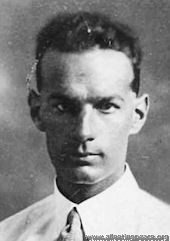
Sqn-Ldr (Sir) Christopher Joseph Quintin Brand KBE, DSO, MC, DFC
|
||
|
Born in Beaconsfield, in the 'Cape Colony'. WWI Ace (16 victories). Knighted in 1920 after (more or less) flying to Cape Town in the Times' Silver Queen. Principal Technical Officer at RAE Farnborough 1925-7; played a vital role in the Battle of Britain in charge of No 10 (Fighter) Group. Later an Air-Vice-Marshall; died in 1968. |
 photo: 1916, when a 2nd Lieutenant in the RFC, aged 23
 in 1926
- Details
- Hits: 5172
|
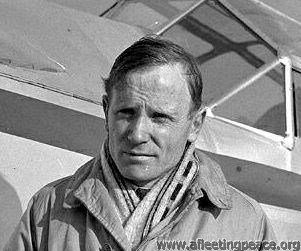
Harold Leslie Brook
|
||
|
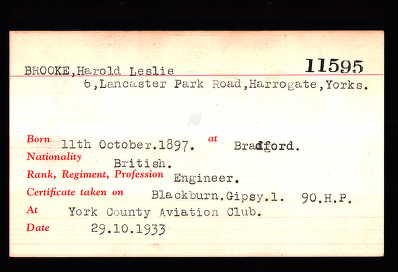
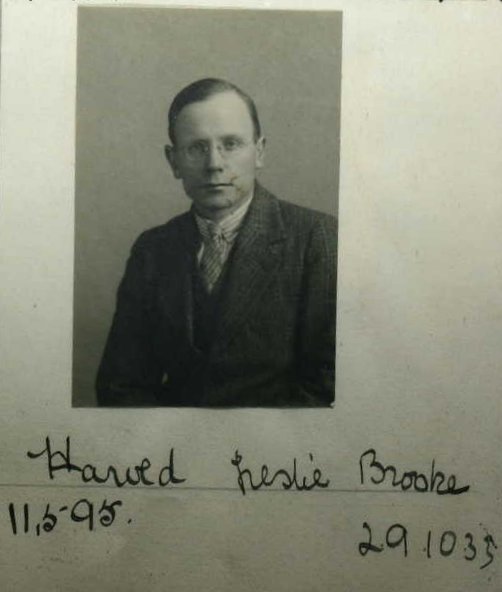
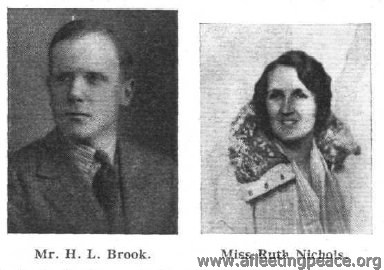
b. 11 October 1897, in Bradford Only learnt to fly in 1933, and just scraped up the minimum 100hrs solo flying time required to enter the Race. The aircraft was barely ready in time either; a month before the start it didn't have any seats, and was in "a very unfinished condition". Harold was not impressed by "those fools at Reading [i.e. Miles Aircraft]... this is not the first time they have omitted to do something". In March 1934, he tried to break the England-Australia solo record (held by CWA Scott) but only got as far as the Cevennes before crashing into one of the large mountains they have there. To give him his due, he picked up the important bits of his aeroplane, brought them back and used the engine in this Miles Falcon. In 1935, after taking part in the MacRobertson, he flew back from Australia in record time; you might like to see him talk about his record-breaking flight (on the other hand, you may have some drying paint that needs watching); if so, click Record Flight From Australia - British Pathé (britishpathe.com) Two years later, he added the Cape Town record. Mercifully, there don't appear to be any interviews about this one. Pilot Officer in the Administrative and Special Duties Branch in May 1940, then briefly (28 Oct 1940 - 3 May 1941) in the Air Transport Auxiliary (ATA) And, despite what you may read or hear, was never an accountant in his life (although with his spectacles on, he did rather look like one, and when he talked, he did rather sound like one [sorry]), and he signed himself 'Brook', not 'Brooke'. But 'e were definitely from 'Arrogate.
H. L. BROOK writes to TERRY'S Dear Sirs, I should like to take this opportunity of congratulating you on the excellence of your Springs in my Gipsy 6 Engine. In a record-breaking flight of this description the engine has to be run for long periods in extreme temperatures, and at a higher rate of revolutions than normal, and for a valve spring to break would spell disaster. I had never at any time any fear of this happening with your springs, and they are now at the end of the flight in just as good condition as they were at the start. Yours faithfully, (signed) H. L BROOK. 'Flight' Racing No. 31—H. L. Brook, and —? And speaking of Bradford, here is Harold Leslie Brook, who was born there in 1897, and now resides in Harrogate. He joined the Royal Field Artillery on August 20, 1914, at the age of 16, obtained his commission soon afterwards, and, despite a couple of wounds, served five years in France and India.
Restored to his family, he remained a normal civilian until Yorkshire began to build and fly sailplanes and gliders. These occupations kept him mildly diverted until the approach of his 37th birthday. Then he began to yearn for horse-power. The York County Aviation Club at Sherburn-in-Elmet offered a likely fulfilment of this secret ambition. So, in August, 1933, Brook placed himself in the hands of Instructor Cudemore, and after four hours' instruction became a soloist with serious designs on the MacRobertson Handicap, for which Phillips and Powis have built him the first of their Miles 'Falcons'. What happened between last autumn and this spring is now almost historic. Brook bought the "Puss Moth" (Heart's Content) in which the Mollisons had crossed the Atlantic, and, with a total of 43 hr. in his logbook, pushed off solo from Lympne to survey the route to Melbourne. That was on March 28, 1934, at 5.20 a.m. By noon the incident had closed. Describing it a few days later Brook said that, while flying through very dirty weather over France, he was forced down from 12,000 ft. by ice formation on the wings, and, before he knew how or why, the side of an unsuspected mountain was rushing up at him out of the murk. Guided by some uncanny sixth sense, he brought off a bloodless landing on the mountain proper. The scene of this epic of the air was Genolhac, in the Cevennes. With some local help he salvaged the "Gipsy Major," brought it back to England, and has had it installed in Heart's Content II. Brook's next attempt on the Australian record will not be solo. If expectations are realised, he will be accompanied by two lady passengers. 'Flight' Another England-Australia attempt MR. H. L. BROOKE, a member of the York County Aviation Club, left Lympne at dawn on the morning of Wednesday, March 28, on an attempt to break the record for the England-Australia trip held by Sir Charles Kingsford-Smith with the time of 7 days 3 hours. Mr.Brooke was flying the " Puss Moth " (" Gipsy III ") Heart's Content, in which Mr. J. A. Mollison made an Atlantic crossing. A few hours after leaving Lympne, while flying through fog, he crashed in deep snow near Genholac, in the Cevennes. The machine was completely wrecked, but Mr. Brooke escaped with nothing worse than some bad bruises. For five hours he wandered about inthe mountains, and eventually found a small village, where he was given every attention. Later he returned to the wreck of his machine, and removed the instruments and other articles of value. 'Flight' April 4, 1935 YORK COUNTY AVIATION CLUB, SHADWELL, LEEDS During March the York County Aviation Club, Ltd., flew 63 hours at Sherburn-in-Elmet, and Miss Maurice and Mr.Pilkington made first solos. Two machines flew to Nottingham for the club dance, and Mr. Humble, the honorary instructor, has presented the club with a fire tender—a very apposite gift! The next dance will be held on April 13. Mr. H. L Brook, who has just broken the Australia-England record with a Miles " Falcon," was trained at Sherburn—which appears to be a pretty good advertisement for the instruction. 'Flight' These days, the home of Sherburn Aero Club: http://www.sherburn-aero-club.org.uk/ SWIFTLY from AUSTRALIA How H. L. Brook, in a " Gipsy "-engined Miles "Falcon" broke the Solo Record : His Story in an Interview with " Flight "LAST Sunday afternoon, at 3.55 p.m., the original Miles" Falcon " landed at Lympne, having flown in 7 days•* 19 hr. 50 min. from Darwin, North Australia, withMr. H. L. Brook, of Harrogate, at the controls. The •pilot thus beat the unofficial " s o l o " record of Mr. C. J.Melrose by 13 hr. 10 min., and the officially recognisedperformance of Mr. J. A. Mollison by 1 day 2 hr. 25 min.The shortest time for the Australia-England trip is still,of course, the 6 days 16 hr. 10 min. of Cathcart Jones andWaller in a " C o m e t ."After leaving Darwin at 5.30 a.m. on Sunday, March 24(Australian time), Mr. Brook's time-table was as follows:—Sunday night, arrived Rambang ; Monday, Penang; Tuesday,Rangoon; Wednesday, Calcutta; Thursday, Karachi; Friday,Athens; Saturday, Rome; Sunday, Marseilles (9.25 a.m.) ;Lympne (3.55 p.m.).the Timor crossing, he told a member of the staff of Flight,was " r o t t e n , " with rain, low clouds and heavy head winds.On the trip from Penang he landed on the delta near Calcutta.Over the Sundarbans low clouds and darkness caused him totake this measure rather than to fly on, possibly missingCalcutta, and, as he put it, perhaps making a crash landingthrough shortage of petrol.Perhaps the worst section of the trip was that betweenAthens and Rome, particularly the portion over the channelof Corfu, where a gale was encountered. At Brindisi Mr.Brook was advised not to proceed, but he pushed on andcrossed the Apennines in a snowstorm.And what of the man himself? He is a thirty-eight-yearoldYorkshireman, who, despite the newspaper stories, hasnever been an accountant in his life. When he was youngerhe indulged in motor racing and later built a few sailplanesand gliders. Then he joined the York County Aviation Cluband went solo after four hours' instruction. He next boughtMr. J. A. Mollison's "Puss Moth" Heart's Content, and setout for Australia to survey the route to Melbourne, for he haddecided to enter the MacRobertson Handicap. But ice formationforced the " Puss Moth " down on a mountain side inthe Cevennes. Neither Brook nor the "Major" (which, itshould be remembered, had already been flown over the SouthAtlantic) was rendered hors de combat, however. The enginewas salvaged and Brook brought it back to England, where itwas installed in the first of the Miles " Falcons" which thenwas fitted with extra tanks for the race. During the event itcarried a lady passenger and a large helping of appalling
luck (no connection is suggested between the two facts!).Suffice it to say that the Australian trip, a large portion ofwhich was made in easy stages, took about twenty-six daysDuring his stay "down under," Brook worked until the" F a l c o n " and its engine were in tip-top condition beforestarting his almost unheralded flight.Of travelling in the "Falcon " he says that, compared withflying in an ordinary aeroplane with open cockpits, it was" like travelling in a saloon car instead of on a motor cycle. The veteran "Gipsy Major" was run throughout the flight at 2,100 r.p.m. HILLSON PRAGA Imported specimen 107 Praga E.114 OK-PGC. Regd G-ADXL (CofR 6479) 27.11.35 to F Hills & Son Ltd; dd Speke to Barton 30.12.35. CofV 91 issued wef 27.2.36. Dd 20.4.36 to Harold Leslie Brook; flown by him to South Africa, departing England 6.5.36; arriving Cape Town 22.5.36. Regn cld 6.36 as sold. Regd ZS-AHL 6.36 to OG Davies, Cape Town. Sold 8.37 to H Cooper, Cape Town. Converted to glider at Youngsfield 9.53.
30th Aug. 1940. ADMINISTRATIVE AND SPECIAL DUTIES BRANCH. Harold Leslie BROOKE, D.C.M. (84353). |
- Details
- Hits: 3691
| Capt Frank Crossley Griffiths Broome
|
||
| Vickers test pilot - he and Stanley Cockerell (q.v.) were known as the 'Heavenly Twins'; Frank served under Stanley in WWI; when Frank married Miss Ismay Lermitte in Colchester in 1920, Capt. S. Cockerell, A.F.C., was best man.
He and CJQ Brand were in the same squadron in WWI. In 1920 the Heavenly Twins were the pilots of the attempt, organised by The Times, to make the first flight from Cairo to the Cape. The Vimy Commercial aeroplane left Brooklands on January 24 but crashed at Tabora [Tanganyika] on February 27. They finally reached the Cape "after a series of undeserved misfortunes". Frank Crossley Griffiths Broome - born in London (St Pancras) in 1892. He enlisted in the Army Service Corps. Won DFC, and AFC.
Youngest son of Frank Broome, and lived at Winterbourne, Weybridge.
He married Ismay Lermitte, daughter of Lt Col Lermitte (deceased) of Woodhouse, Great Horkesley at All Saints Church on August 17th 1920.
At the wedding ceremony, the cake was adorned with the silver Vickers Vimy, which had been presented to him by The Times newspaper, to commemorate his 1920 Africa flight (in Silver Queen II) The purpose was to test the feasibility of the Cape to Cairo route, and was sponsored by the newspaper. The plane crashed, and it sounds as though the expedition was an arduous one. Later the same crew of Captain Cockerell, Captain Broome and ex Sgt Major James Wyatt crashed in a seaplane in March 15th 1922, about four miles from Hastings. Broome also flew with 112 Sqn, based at Throwley. On the night of 19/20 May 1918, he was one of dozens of pilots that took off against a wave of Gothas and Giants which attacked the UK. Broome didn't see them, but fellow sqn pilot CJQ Brand bagged a Gotha that night.
|
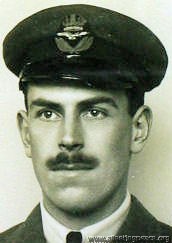 photo: 1917, when a Lieutenant in the Army Service Corps, aged 25
- Details
- Hits: 5375
|
Mr Tom Campbell Black
|
||
|
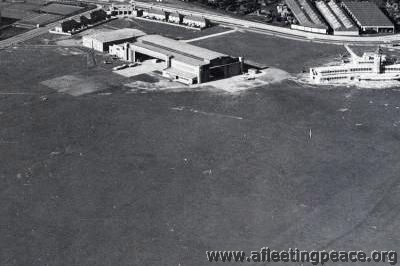
MacRobertson hero (Part I). b. 22 August 1899 in Brighton RNAS in WWI, then moved to Kenya as a 'soldier settler'. Persuaded Mrs Florence Kerr Wilson to set up Wilson Airways in 1929, and became her managing director and chief pilot until 1932 when he returned to England as personal pilot to Lord Marmaduke Furness. He always liked horses. Married Florence Desmond (a famous actress and comedienne) in 1935, before Charles Hughesdon (see below) did. See here: Tom's obituary, in The Aeroplane - September 23, 1936 by Charles G Grey, the Editor Tom Campbell Black was killed at the Liverpool Municipal Aerodrome at Speke on September 19 in an accident of a kind which has happened over and over again without harm to anybody. That Tom Black of all people should have been killed in such an accident is a freak of Fate. At present the north side of Speke airport is occupied by 611 West Lancashire (Bomber) Squadron, Auxiliary Air Force. On Saturday Tom Black, who had flown up from Gravesend a day or two before in the Mew Gull in which he was to compete in the Johannesburg Race, was demonstrating the machine to the Liverpool people who had backed him in the race. He had made several flights, and an experienced pilot who saw them said that Tom Black's last landing was the best he had ever seen in a Mew Gull or anything else, and that his landings were better and better after each flight. To make inspection by the public easier the machine was in a little roped-in enclosure close to the RAF's Bessonneaux temporary sheds. At four o'clock in the afternoon Tom Black started out from this little enclosure intending to fly the machine back to London. His line when taxying out to the proper place from which to take off at the Western side of the aerodrome down by the river against an East wind took him parallel with the boundary of the landing area - necessarily in the direction from which any machine landing into the wind in the ordinary way would arrive. At that moment Flying Officer P S Salter, RAF, who had taken one of 611's Harts up for a test, was coming in to land, which he did in a quite orthodox and proper manner - up-wind towards the squadron's sheds. Tom Black started taxying out with a man on each wing-tip. A short way from the enclosure he signalled to the men to let go and speeded up to about 15 mph, then he slowed to about 10mph and was to be seen looking at something in the cockpit. That probably accounted for his not seeing the Hart coming in. The pilot of the Hart obviously could not see him, and so long as pilots are stuck behind massive motors they never will have a chance of avoiding collisions on the ground. Those on the ground saw what was happening, but naturally could do nothing to stop it. The Hart came slowly on, taxying towards the sheds, and the left wing of the Mew Gull hit the left leg of the undercarriage of the Hart, which collapsed. Apparently the first revolution of the airscrew of the Hart after the impact hit the top of the Mew Gull's left wing and the next tore straight across the cockpit. The screw then hit Tom Black, who evidently threw up his hands to protect his head when he saw the Hart looming over him, and the screw hit him on the side so that he died from internal injuries. The narrowness of margin between this fatal accident and what might have been merely an annoying collision is shown by the fact that the windscreen, or rather the forward fixed part of the transparent cover of the cockpit, is untouched, as also is the back-board of the cockpit against which the seat rests. A foot either way would have saved him. If the machines had met head-on the Hart would probably have removed the motor from the Gull, and though there would have been a fire the impact between the machines would have been so slight that the odds would have been in favour of Tom Black getting out. If the machines had met at a slightly different angle the airscrew of the Hart would probably have chewed up the wing of the Gull and would never have touched the cockpit at all. And naturally if either had been going at different speeds, faster or slower, the collision would never have happened, because the angle of their tracks, which was estimated by an experienced on-looker at about 170 degrees, would just have allowed them to clear one another. Tom Campbell Black was born in 1899. He went to the Royal Naval School at Greenwich, where he was when war broke out in 1914. Thence he joined the RNAS at Cranwell in 1917. Naturally he was best known even among aviating people, as co-pilot with CWA Scott, of the de Havilland Comet which won the MacRobertson Trophy and its £10,000 first prize in the race from Mildenhall to Melbourne. Later he added somewhat to his reputation by flying from London to Cairo in something under twelve hours, - but these were minor affairs when compared to his real service to British Aviation as the great pioneer of Air Transport in East Central Africa. With the financial help of that far-sighted lady, Mrs Wilson of Nairobi, he started Wilson Airlines, which today is linked up with Imperial Airways, and was the foundation of air transport in our East African colonies. Tom Black himself made thirteen journies by air between Kenya Colony and England, which did much to convince East Africa. Also by way of proving his arguments he flew round the capitals of Kenya, Tanganyika, Uganda, and Zanzibar in a day. For all that work rather than for the merely ephemeral notoriety of hitting up a few records Tom Black deserves to be remembered as one of the builders of British Aviation. As an inidvidual Tom Black was one of the most lovable persons I have met. His Service work and his African flying proved that he was all that a man should be, and he had a far-seeing commercial sense, but with it all he had a sort of juvenile charm and simplicity which endeared him to all who knew him at all well. Everything appealed to him as being intensely amusing, and yet he had an earnest and serious side to his character. His sense of humour was immense. If only one could get some of his Central African adventures down on paper just as he told them they would be a great success. His story of the Serengetti lion which killed the American tourist who tried to take a kinema picture of it after it had been wounded, and what happened after that, could have been made by Rudyard Kipling into one of his best stories, practically without alteration. Another of his endearing qualities was his loyalty to his friends. One found it in his admiration for CWA Scott, and his stories of their partnership in their race to Australia. I might make Charles Scott uncomfortable if I wrote all that Tom Black told me about him, but I do think that it is due to both of them to say that when after the Australian race certain handsome financial offers were made to Charles Scott, as the senior pilot, he insisted that Tom Black should share the proceeds with him - and that in an equally proper spirit Tom refused to share. In March 1935 Tom Black married Miss Florence Desmond. Some day the theatre trade will discover that she is one of the World's greatest tragic actresses, as well as one of our greatest comediennes. In fact the last time I saw Tom he was greatly pleased because at last somebody in the theatre trade had offered his wife a real acting part in a play, instead of just regarding her as a genius in funny films and in cabaret. They were a happy couple, and so completely opposite in temperament that their married life was bound to be a success. Last year Mr and Mrs Tom Black formed Campbell Black (Aviation) Ltd. to take on any kind of job in aviation. They were the sole directors. The company began its activity by owning a few aeroplanes and letting them out to air circuses and Tom Black used to get quite a lot of fun out of running about the country supervising their activities while preparing bigger schemes. The last time I saw him was on one of those trips to the opening of the Municipal Aerodrome at York. We published a photograph of him at the time. There he was his joyous, boyish self, and that is how I like to remember him. -------------------- I've read this a few times now, and I still can't quite understand what happened at Speke. The airport looked like this in 1936:
We are looking north-west; the River Mersey would be bottom left, off the edge of the photo. If there was an East Wind, aircraft would be taking off and landing into it, so Tom would go to the western end of the landing area. The Hart would also be landing at the western end, heading east. He would probably land very close to the spot where Tom would be parked, waiting for his turn to take off. The Hart was landing 'up-wind towards the sheds', and then taxied 'towards the sheds'. So... what was the Hart doing taxying back westwards? Apparently the two aircraft hit almost head-on - the left wing of the Gull struck the left undercarriage of the Hart. Surely the Gull was static, as Tom was looking for something in the cockpit and obviously not expecting a Hart bomber to suddenly appear on top of him? ... One explanation is that Tom was parked facing south-south-east, the Hart landed south-west of him and then turned north-west, though I wonder why in that case the Hart pilot didn’t see the Gull. Unless (and this seems unthinkable) Tom was taxying across the middle of the landing area, not paying proper attention; the Hart landed, came straight on and hit him. Poor Mr Salter; he must have gone through the rest of his life known as the man who killed TCB. |
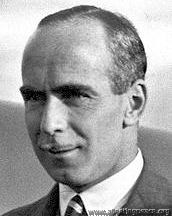 photo: 1934
- Details
- Hits: 3745
|
Maia Carberry |
wife of John (Lord) Carberry. In September 1927 Alan Butler (with Peter Hoare as passenger), and Hubert Broad, who took Maia, went to Venice to support the British Team in the Schneider Cup in Venice. In case you were wondering, "Mrs. Carberry wore a pale blue leather flying helmet to match the colour of her Moth aeroplane." She owned: a 1927 Fokker F.XI, G-EBUT VP-KAB/VH-UTO 'Miss Africa', and a 1927 DH.60X Moth, G-EBSQ, in which she was killed in an accident in Nairobi on the 12 March 1928. |
|
- Details
- Hits: 2882
| Capt Rhinhold Ferdinand Caspareuthus | ||
|
|
|
|
|
b. Paarl, S Sfrica, 9 Sep 1899 Ikmperial Airways, based in Cape Town from 1929 Promoted to Senior Master in October 1938 |
||
- Details
- Hits: 4963
|
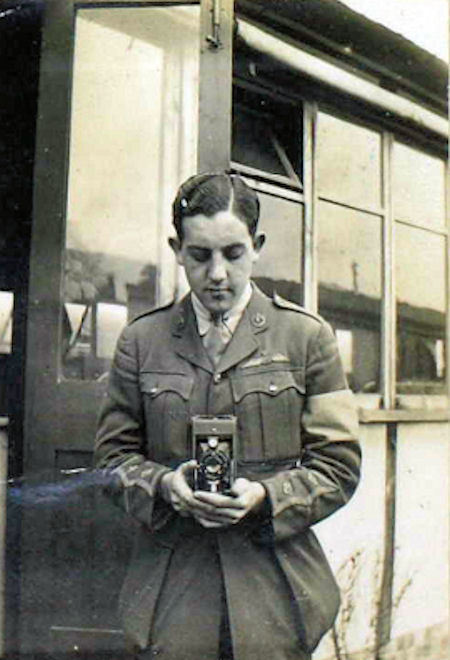
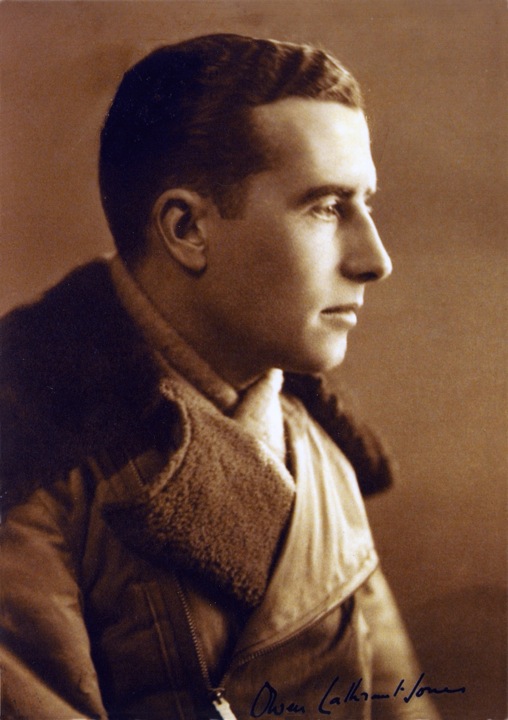
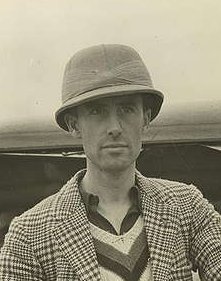
Lt Owen Cathcart Jones
|
||||||||||||||||||||||||||||||||||||||||||||||||||
Born 5th June, 1900, London (definitely not Canadian, despite some nasty rumours).
|
||||||||||||||||||||||||||||||||||||||||||||||||||
 1934
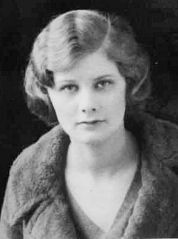
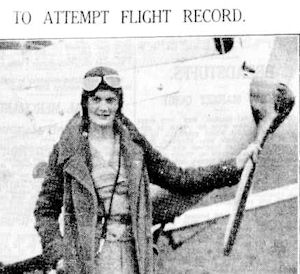
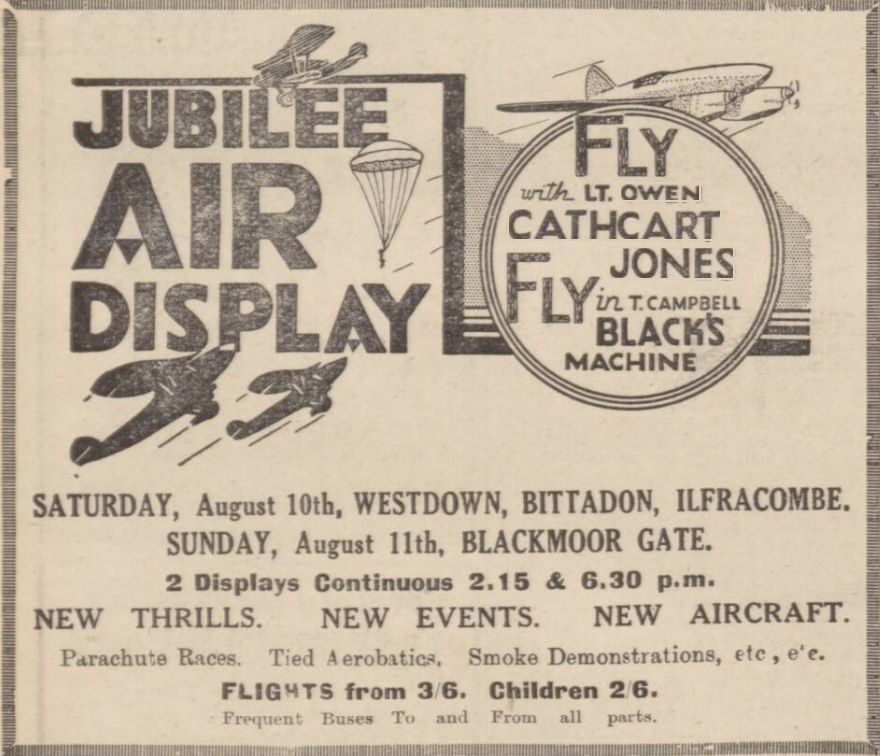
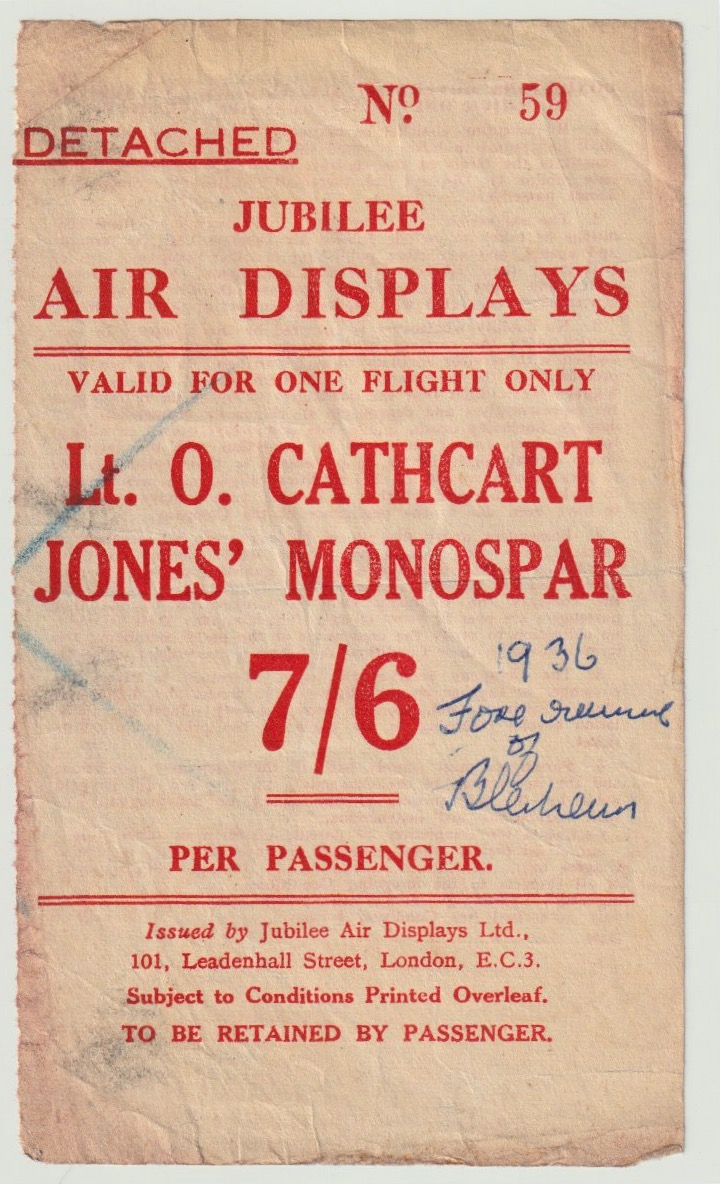 via Joss Mullinger

- Details
- Hits: 3856
|
F/O Arthur Edmond Clouston
|
||
|
Famous D.H. Comet pilot, from New Zealand. Civil Test pilot at RAE Farnborough in 1936. Flew Desoutters in other races.
© The Royal Aero Club [0654-0280]
d. 1984 |
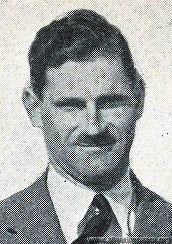 in 1936, aged 28
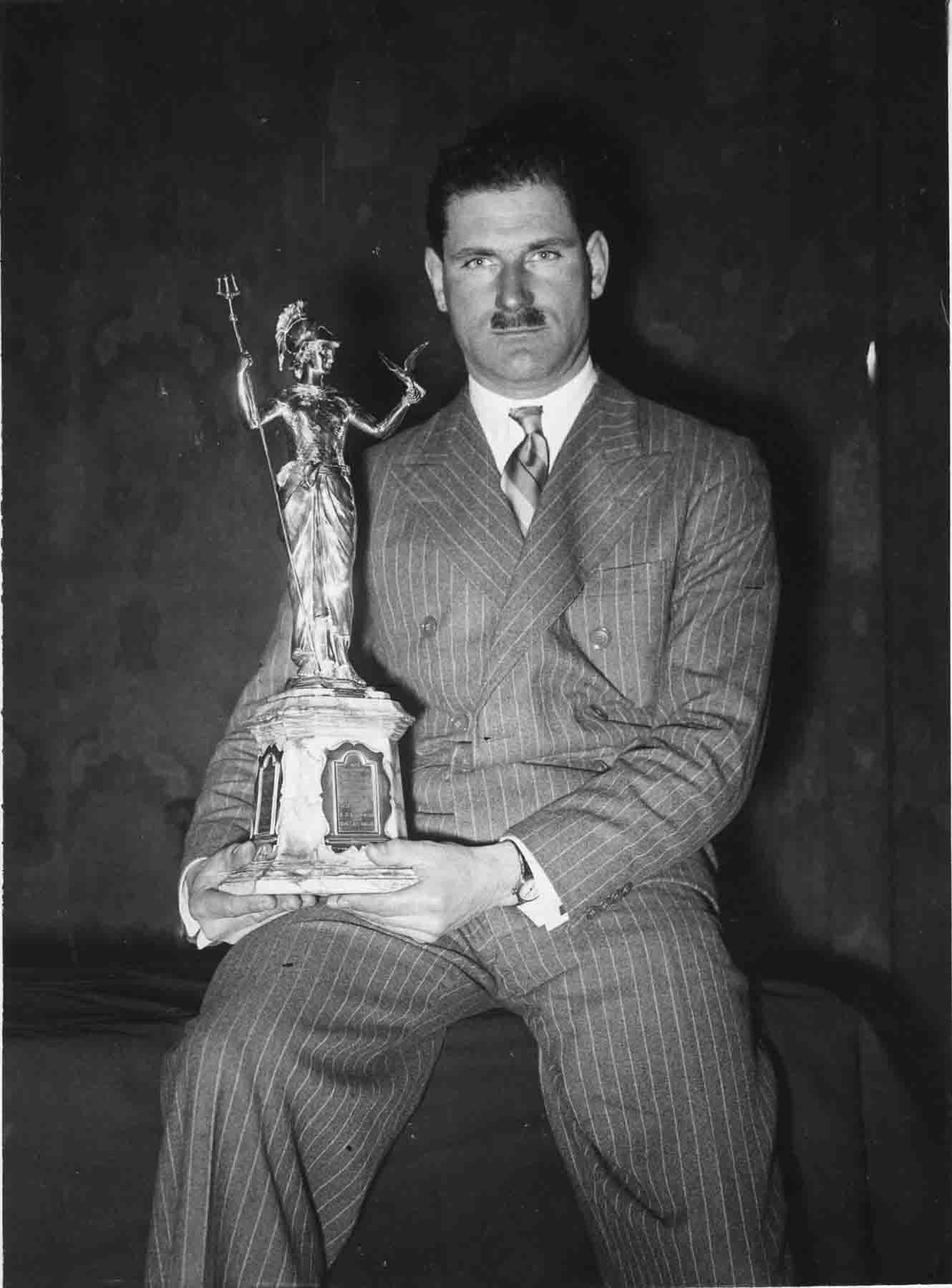 With the Brittania Trophy
- Details
- Hits: 4617
|
Mr (Sir) Alan John Cobham KBE AFC
|
||
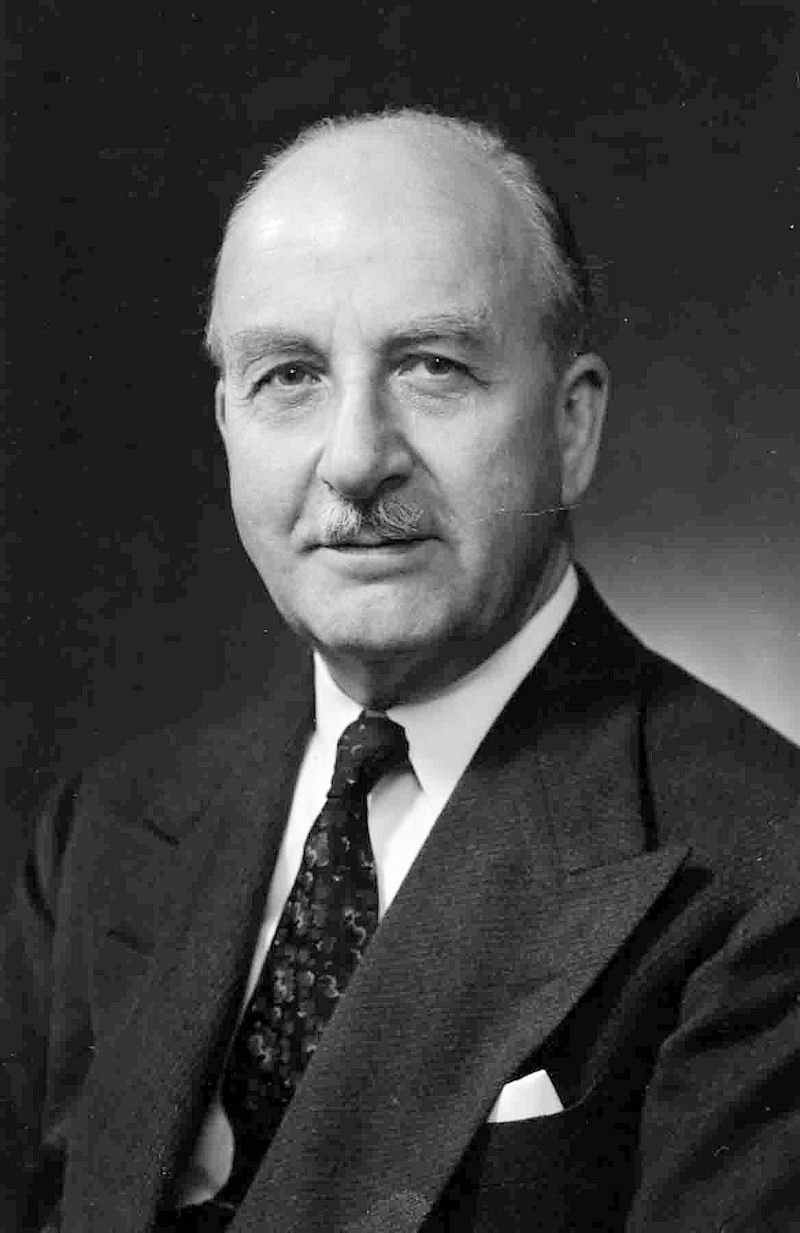 |
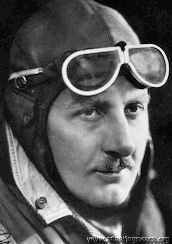 in c.1934, aged c.40
- Details
- Hits: 57684
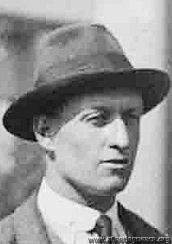
| Capt Stanley Cockerell AFC, Croix de Guerre (Belgium) | ||
|
photo: 1930, aged 33 |
b. 9 Feb 1895, the 'willowy' Vickers chief test pilot - he and his assistant Frank Broome (q.v.) were known as the 'Heavenly Twins'. RFC in WWI (7 victories). Married Miss Lorna Lockyer in 1921. Killed in WWII: on the 29th November 1940, when the Running Horse(s?) Pub in Erith was bombed. His 6-year-old daughter Kathleen also died and they were buried at the church of Saint Mary, Sunbury on Thames. Lorna also died during the Blitz. Some children survived and were split up and most were adopted, losing touch with each other. |
|
- Details
- Hits: 3326
| F/O (later Flt-Lt, Sqn Ldr) Edward Cecil Theodore Edwards | ||
|
|
||
|
Cecil, brother of Hugh. From Kensington, London. Sometimes known as "Sphinx". M.A.(Oxon); rowing blue in 1925 and 1926 (when he was the "best man in the crew, as always"); the first member of the Oxford Air Squadron to qualify as a pilot. Flew, with Winifred Spooner, a Desoutter in an attempt to reach Cape Town in 1930, but they had to ditch in the sea off Italy, and swim about a mile to shore. Winner of the King's Cup in 1931; here is his "Competitor's Armband" from the race:
Apparently, after the race, "a triumphant Cecil 'Sphinx' Edwards was invited to Sir Robert MacAlpine's house to celebrate the win (Sir Robert had lent Sphinx his Bluebird aeroplane). On leaving the party, Sir Robert grabbed the trophy, said "Well done Edwards" and that is the last that Sphinx or the family would ever see of the trophy. It is now awarded at Henley as The Prince of Wales Challenge Cup after mysteriously being donated to Henley by an antique shop owner." with many thanks to Gavin Jamieson, who found the armband among his family's archives
Killed in WWII: 31st August 1940, when a Wing Commander (pilot) 53 Sqn RAF; buried in Rotterdam, Holland. |
||
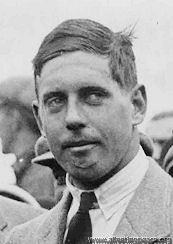 1931, aged 26

- Details
- Hits: 4144
|
Sophie Elliott-Lynn / Lady Mary Heath Royal Aero Club Certificate No. 7975 (4 Nov 1925) |
||
|
|
Lady Heath at Roehampton |
|
|
b. Sophie Catherine Theresa Mary Pierce-Evans on 10th November 1896 in Knockaderry, Co Limerick, Ireland; her crazed father beat her mother to death (with a stick) and was jailed for life, so she was brought up by her aunts. A well-known, courageous, determined and forceful sportswoman, an athletic 6-foot tall Irishwoman 'never averse to publicity' (which earned her the nickname 'Lady Hell-of-a-Din') who was elected World Champion Lady Aviator by the USA. At Stag Lane in 1926, Mrs Elliott-Lynn formed a small group owning a pale blue Moth, but was also the "somewhat erratic" pilot of an S.E.5... ...which she crashed a year later at Brooklands. In the same year, when Lady Bailey and Mrs Geoffrey de Havilland hit the headlines with a world record climb to 17,283 ft, Avro countered with Mrs Elliott-Lynn climbing to 19,200 and making a 1,300-mile trip in a single day, during which she made 79 landings. Then, her first husband Major Elliott-Lynn having died off, Sophie married Sir James Heath, Baronet, and thereby became Lady Heath. "Lady Heath stepped from her tiny aeroplane at Le Bourget after her long flight from the Cape in May 1928, as fresh as a daisy. 'It is so safe that a woman can fly across Africa wearing a Parisian frock and keeping her nose powdered all day.' This was the first solo flight from any overseas Dominion to Britain, and she was the first woman to pilot an aeroplane from Cape Town to London. Unfortunately, Sophie was not very good with Sir James' money; she was rather too easily persuaded to "buy a lot of things" and send him the bill. Having given her £20,000 as a marriage settlement and bought her an aeroplane, he was eventually obliged to take out a note in the newspapers forbidding her to "pledge his credit". The marriage was dissolved in 1932. Having fled to America, Sophie finally became plain Mrs Williams; he was an airman from Kentucky. d. 9 May 1939, aged 42, in London when she fell down the stairs of a tramcar. She left £204. Sophie owned, at various times:
|
||
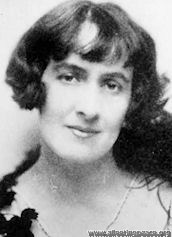 in 1925
- Details
- Hits: 3208
| Capt Stanley Seward Halse | ||
|
|
|
|
|
Learnt to fly during WWI, and by 1936 was a flying instructor at the Johannesburg Light Plane Club. Two members (Rex Hull and George Albu) put up the £1,800 required to buy the Mew Gull to enter for the Schlesinger Race. Presumably, that was the last they saw of their money. Stanley dislocated his elbow in the subsequent crash, and much later found out that three of his vertebrae had telescoped. |
||
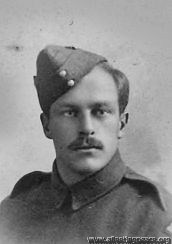 1915, when a Corporal, aged 23
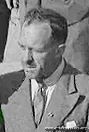 1936, aged 44
 b. 6th December 1892 in Queenstown, South Africa.
- Details
- Hits: 3174
| Mr Alexander Adolphus Dumfries Henshaw | ||
|
|
|
|
|
b. 7th November, 1912. The extraordinary Mr Spitfire. Leant to fly in (of all places) Skegness. "After 25 hours solo bought a Comper Swift and in the 1933 King's Cup Race won the Siddley Trophy with it." In 1936, still the youngest competitor in the race. d. 24th February, 2007 |
||
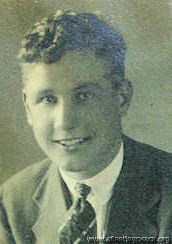 1932, aged 20
- Details
- Hits: 3009
| Wing-Cdr Edward Goodwin Hilton AFC | ||
|
|
|
|
|
b. 1895 in Surrey RFC in WWI AFC in 1920 for 'gallantry and distinguished services' in 70 Sqn, Egypt A pilot at Martlesham. Made an attempt at the South Africa - England record in 1936 (flying 'Miss Wolseley', an Airspeed Envoy), but was delayed in Athens and abandoned the attempt. m. 1926 Joyce Elizabeth [Martin] Entered the 1937 Kings Cup Race, I'm afraid, "largely out of curiosity''. He was thrown out of the aircraft in very bumpy conditions near Scarborough; his passenger (the owner of the aircraft) Wing-Cmdr Percy Sherren, a native of Crapaud, Prince Edward Island, was also killed in the subsequent crash.
|
||
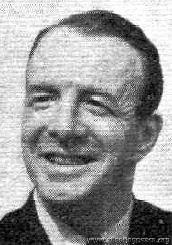 1937, aged 42
- Details
- Hits: 3409
| Capt Walter Laurence 'Wally' Hope | ||
|
|
|
|
|
Technical director of Air Freight. b. 9 Nov 1897 in Walton, Liverpool Aged 18, and described as a "trick-cyclist", he was summoned in 1915 for committing a breach of the Realms Act by taking a photograph of one of his Majesty's ships at Barrow; he pleaded not guilty, admitted that he was carrying a camera, and was fined £5. A close friend of Bert Hinkler, he made an extensive search over the Alps at his own expense when Bert went missing on his fatal flight in 1934, but then sued the Daily Mirror when they published their hair-raising account of his exploits, "Captain Hope's Ordeal in the Alps". He said there was "not one word of truth in it." m. 1920 Marjory [Stone] Three-time winner of the King's Cup Race (1927, 1928 and 1932) In the 1926 King's Cup race, "he had to descend at Oxford while racing for home in the last lap with a small “airlock" in his petrol pipe, which effectually put his tiny Moth machine out of the running. He landed in a small field - so small that he found it impossible take off again when his minor trouble had been rectified without pushing his plane through three fields to a broader stretch of country, where he could rise. By this time it was so late that he decided that would abandon the race and go on at his leisure to Hendon. Interviewed at his home in Hendon yesterday, Mr. Hope said: “The only thing that I am really disappointed about is that I feel sure that if this trifling mishap had not occurred I should most certainly have won. For three laps I was racing neck and neck with Captain Broad, with an aggregate speed equal to his - between 90 and 91 m.p.h." Daily Herald At the end of the 1928 race, "Thinking all was over he proceeded to loop and stunt before landing, and having landed switched on his well known winning smile. Suddenly there was a terrific hooting, and Sir Francis McClean in his white Rolls-Royce came tearing across to tell Hope he had not crossed the finishing line... Within 30 seconds Hope was in the air again, discovered the finishing line, landed, and again switched on the winning smile fortissimo." C G Grey Entered for the MacRobertson Race in 1934 (No 24) but didn't take part in the end. m. 1954 Hilda L [Stone or Hunt] d. Oct 1979 - Isle of Wight |
||
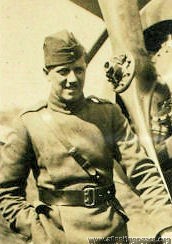 1917, when a 2nd Lieut in the RFC, aged 20
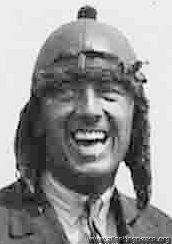 1928, aged 31
- Details
- Hits: 3432
|
Amy Johnson (Amy Mollison) Royal Aero Club Certificate 8662 (28 Jun 1929) |
||
|
|
1934 |
|
|
Amy Johnson, Hull's Finest a.k.a. Amy Mollison Born 1st July 1903 in Kingston upon Hull; Amy was 'a slight young woman with heavily lidded eyes, dentured teeth, a shy smile and a soft Yorkshire accent' [she later developed a rather fake upper-class BBC one, possibly under her husband Jim's influence]. By 1929, a secretary (albeit one with an economics degree, and an engineer's licence to go with her aviator's certificate) turned solo record-breaking pilot and all-round nation's sweetheart. Married for six years to Jim Mollison (which was a Big Mistake). On May 26th, 1932, after her solo flight from America, Amelia Earhart was the guest of the Royal Aero Club in London, and amongst the ladies in attendance were Lady Bailey, Amy, and Winifred Spooner (less than a year before her untimely death). Air Transport Auxiliary in WWII (Died in Service) Amy's aircraft included: a 1928 DH.60G Gipsy Moth (G-AAAH) which she named 'Jason', and is now in the Science Museum; a 1930 DH.80A Puss Moth, G-AAZV, 'Jason II'; a 1930 DH.60G Gipsy Moth, G-ABDV, er, 'Jason III'. After 1930 she owned: a 1932 DH.60G III Moth Major, G-ABVW, ... ummm, let me guess... yes... 'Jason 4', and a 1932 DH.80A Puss Moth, G-ACAB, 'The Desert Cloud'. |
||
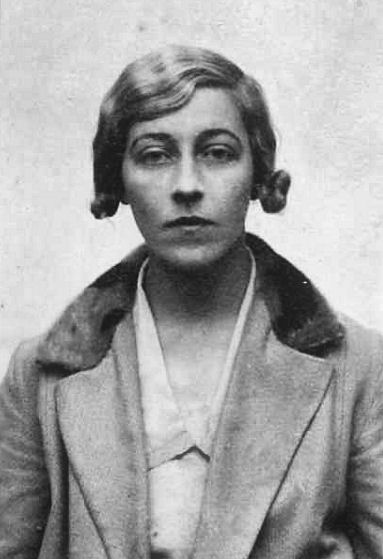 1929
- Details
- Hits: 3061
| Sqn-Ldr Arthur Gordon Jones-Williams MC & Bar | ||
|
|
|
|
|
Known as 'John Willy'; Welsh Regiment (attached to RFC) in WWI (11 victories).
d. 1929 in the Fairey Long-Range Monoplane which crashed near Tunis while trying to break the world distance record; buried in Newtimber, Sussex. |
||
- Details
- Hits: 2924
| Lieut-Comm George Pearson Glen Kidston, RN | ||
|
|
|
|
|
Known as Glen. Survived being torpedoed in WWI on the cruiser 'Hague', had several narrow escapes when motor racing, and in November 1929, he was the only survivor when Junkers tri-motor D-903 crashed near Caterham and caught fire. He "escaped through a hole in the side of the aeroplane almost immediately after it struck the ground, and Prince Eugen [zu Schaumburg-Lippe] fought his way out a little later; but by the time would-be rescuers had arrived there was no hope of saving the others." The Prince died the following day. Glen spent the winter abroad, then in May 1930, his widowed mother having died, put his house up for sale; Nyn Park, Northaw, near Potters Bar, "nearly a square mile with a small mansion". And a lake. And a 9-hole golf course. Oh, and 25 cottages. A few smallholdings.... In April 1931 he and Owen Cathcart Jones broke the England to Capetown record, but shortly afterwards (5 May) he was killed in the Drakensburg Mountains, Natal; the aircraft he had borrowed, while his Vega was being overhauled, broke up in mid-air during a storm. Nyn Park was sold, and the estate broken up. The small (23-bedroom) mansion was bought after WWII by the Alexandra Hospital for Children but never used, and burned down in 1963. |
||
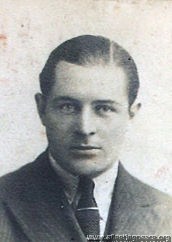 photo: 1928, aged 29
- Details
- Hits: 3628
| F/O David W Llewellyn | ||
|
|
|
|
|
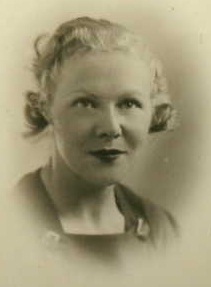
b. 9 Aug 1904 in Wichelsea, E Sussex; son of the President of the Royal Academy. An instructor at Hanworth. With Mrs Jill Wyndham, broke the Cape Town-England record in 1935 (6 days 12hr 7min). [I say, who is this Mrs Jill Wyndham, and did Mr Wyndham know about this? *] Apparently, they had intended also to lower the record for the outward trip. "... they were going strongly, but their chances were ruined by a forced landing in an African rice field. The aircraft was set down by the light of lamps carried by an Arab funeral procession." He had also flown solo in a "little Aeronca" to Johannesburg, and here he is, in it:
[To be more precise, in the 23 days between the 7th February and 1st March 1936, he flew from Hanworth to Rand Airport, Johannesburg, to deliver the machine to a private buyer. The 2-cylinder engine of an Aeronca produced 40hp.] Killed 21 September 1938 in an accident in a BA Swallow. [ *It seems that Doris Jillian Wyndham
b. 11 May 1911, was a former pupil of Mr Llewellyn. Or possibly of Tom Campbell Black, if we are to believe Harald Penrose. Her son tells me that "she died in 1963 at the age of 52. Lt Cdr Wyndham did know about the record attempt!"] |
||
 1932, aged 28
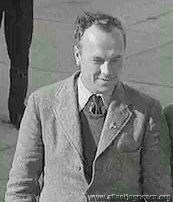 1936, aged 32
- Details
- Hits: 3275
| Mr James Henry Gordon 'Butch' McArthur | ||
|
photo: 1935, aged 24 |
|
|
|
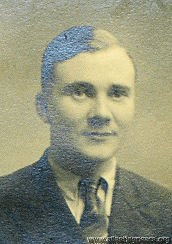
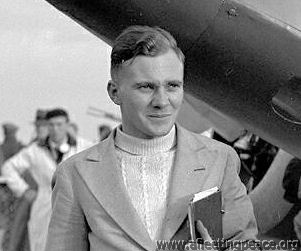
37925 Flight Lieutenant James Henry Gordon ‘Butch’ MacArthur DFC Born in Tynemouth on 12th February 1913, MacArthur became a civil pilot in the 1930’s, at one time holding the London to Baghdad speed record. He took an RAF Short Service Commission in 1936, being Commissioned as an Acting Pilot Officer on the 6th, and on 18th July was posted to No.9 Flying Training School at Thornaby where he became a full Pilot Officer on 11th October. He then joined the Station Flight at Aldergrove on 14th January 1937 and was promoted Flying Officer on 11th May. On 1st October 1938 he was posted to the Experimental Section, Royal Aircraft Establishment at Farnborough as a test pilot. MacArthur was posted to 238 Squadron at Middle Wallop as a Flight Commander in June 1940, having become a Flight Lieutenant on 11th May, before joining 609 at Middle Wallop as B Flight Commander on 1st August 1940 under S/Ldr Darley. On 8th August whilst flying Spitfire R6977 he destroyed two Ju.87’s off the Isle of Wight at 12:30hrs, and destroyed a Bf.110 on the 11th, again in R6977, 15 miles south south east of Swanage at 10:15hrs. Flying R6977 again he claimed a Bf.110 probably destroyed on the 12th and Claimed a Bf.109 damaged on the 13th August flying R6977. On 15th August he destroyed two Bf.110's in R6769, one northwest of Southampton and the other 15 miles south south west of this. He claimed another Bf.110 Destroyed on the 25th in X4165 at 17:20hrs in the Warmwell / Poole area and on 7th September he destroyed a Do.17Z in L1008, damaging a Do.215 just over a week later on the 15th in R6979 during an action in which he suffered an oxygen failure at 25,000ft. Attacked by Bf.109’s he lost consciousness and came to just in time to pull out of a high-speed dive at a low altitude. The damage to his ears was to require future hospital treatment, but on the 16th he flew Spitfire R6922 to Hamble for repair. The Air Speed Indicator began to malfunction so he decided to follow another aircraft down onto the runway, much to the chagrin of the pilot of the other aircraft who then went around for another circuit. McArthur followed him for a few more circuits until he finally landed, forgetting to lower his undercarriage in the process and writing off the aircraft. ‘I didn’t like the thing anyway’ he is recorded as saying. Following medical tests Butch handed over command of B Flight to Flight Lieutenant Dundas, after which he was not allowed to fly above 5,000 feet and in consequence was not able to return to operations, although on 25th September flying X4165 he had destroyed another Bf.110 (reported as a Jaguar) over Bournemouth. MacArthur was awarded the DFC on 22nd October 1940, announced on the 9th in Squadron Routine Orders, and was portrayed by Captain Cuthbert Orde in November. Subsequently employed on what he called ‘stooge jobs’, he was promoted to the rank of Squadron Leader on 1st September 1941, being promoted to Wing Commander on 1st January 1944. Released from the RAF in 1947 he joined the Royal Canadian Air Force in Edmonton, Alberta in 1948 and was posted to the Winter Experimental Establishment, testing RAF and Royal Navy aircraft. In 1949 he turned his hand to air racing and was granted leave for the races, acquiring Spitfire MkXIVe TZ138 on 4th August 4th, 1949 in partnership with F/Lt Ken Brown DFC, who had been a Flight Sergeant with 617 Squadron on the Dams raid. Purchasing the Spitfire for $1250, registering it as CF-GMZ on 25th August. Sponsored by Pat Reid of Imperial Oil, who told Brown 'you have a sure winner on your hands', and granted a Class F racing certificate of serviceability by the Department of Transport, Butch flew from Edmonton via Toronto and raced in the Tinnerman Air Races at Cleveland, Ohio as number 80, finishing in third place in the Thompson Trophy on 4th September 1949 and receiving a substantial prize for his efforts. MacArthur left the airfield the following morning at 06:00hrs with the winnings and without filing a flight plan or informing F/Lt Brown, later selling the aircraft for $1000 to apparently pay for race debts despite the sponsorship. He was transferred shortly afterwards and served in Canada, the United States and Japan and being awarded the United Nations Korea Medal and the Canadian Forces Decoration. He was badly injured in an accident involving two cars in 1957, ending up in a hospital in Montreal and leaving the airforce soon afterwards, moving to Mexico. He married and divorced after a few years but remained in Mexico and is reputed to have joined the Mexican Air Force. Wing Commander ‘Butch’ MacArthur was killed in a flying accident at the Las Vegas Airshow in May 1961 at the age of 48 and was buried with full military honours through the help of the Vancouver Legion. His medals were sold at Sothebys in 1986. |
||
- Details
- Hits: 3639
| James Allan Mollison MBE | ||
|
|
with Amy and Sir Alan Cobham in 1932 or 33 |
|
|
RAF commission in 1923, transferred to reserve 1928, then a lifeguard and air-mail pilot in Australia. Made many record flights; his philosophy seems to have been "...one cannot be young for long, and it has always been my practice to live for the moment." He and Amy were married in July 1932, but They Said it wouldn't last, and it didn't; Jim had to fly Black Magic back by himself after the Race; Amy went on KLM. Jim joined the Air Transport Authority (ATA) early in WWII, and carried on right through until 1946, ferrying more than 1,000 aircraft, comprising nearly every type used by the RAF - he was a 'Class V' pilot (authorised to fly any type of aircraft without previous instruction). He reckoned he had "on a conservative estimate, successfully delivered not less than 15 million pounds' worth of aircraft." - see https://www.ata-ferry-pilots.org/index.php/category-blog-1940/275-mollison-james-allan
Jim re-married and divorced twice, continued drinking [he once said that, when he was cold, tired and frightened, he recommended "brandy, lots of it"] and ended up as the owner of a hotel in Surbiton, bought for him by his third wife Mary [Kampuis], on the strict understanding that it would never be licensed to sell alcohol.
Died 30th October 1959 in Surbiton, London, aged 54, from alcoholic epilepsy.
Educated: Glasgow and Edinburgh Academies
Commissioned RAF 1923, transferred to reserve 1928, subsequently air-mail pilot in Australia
Record flights:
Australia-England. July/Aug 1931. 8 days 19hrs 28min
England-Cape (first flight by West coast Route) Mar 1932 - 4 days 17hrs 5min
First solo Westward North Atlantic flight. August 1932
First solo westward south Atlantic flight, and first flight England-South America, February 1933
First flight England to USA (with Amy Johnson) July 1933
England to India (with Amy Johnson) October 1934. 22 hours
New York-Newfoundland-London (North Atlantic record crossing coast-to-coast 9 hours 20min) October 1936
England-Cape by eastern route, November 1936. 3 days 6hrs.
Joined ATA early in war. Released in 1946, after ferrying more than 1,000 aircraft, comprising nearly every type used by RAF - single, twin and multi-engined)
Rank: Flight Captain
Category as pilot: Class V (authorised to fly any type of aircraft without previous instruction)
Ferried aircraft all parts of England, Scotland, North Ireland, France, Belgium, Holland.
On conservative estimate successfully delivered not less than £15,000,000 of aircraft.
For his war-time service in the ATA, Mr Mollison was awarded the M.B.E.
|
||
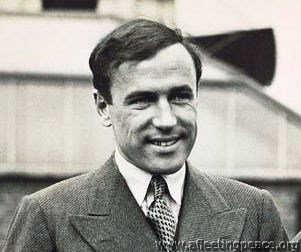
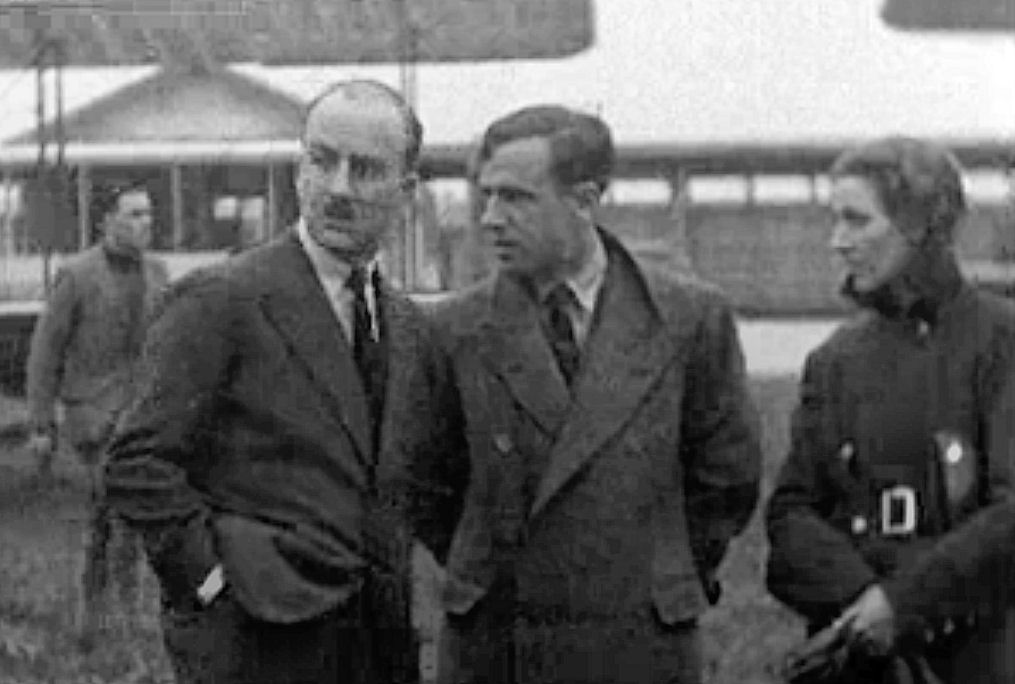
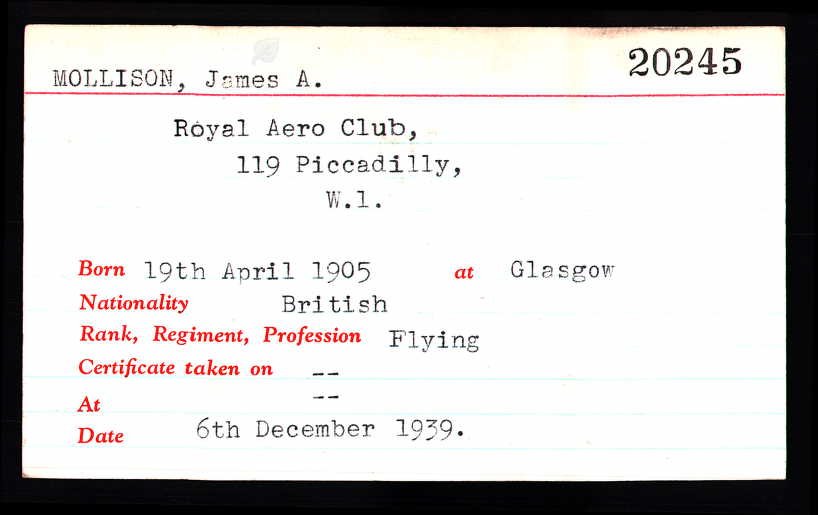
 Born 19th April 1905 in Glasgow, and educated at Glasgow and Edinburgh Academies.
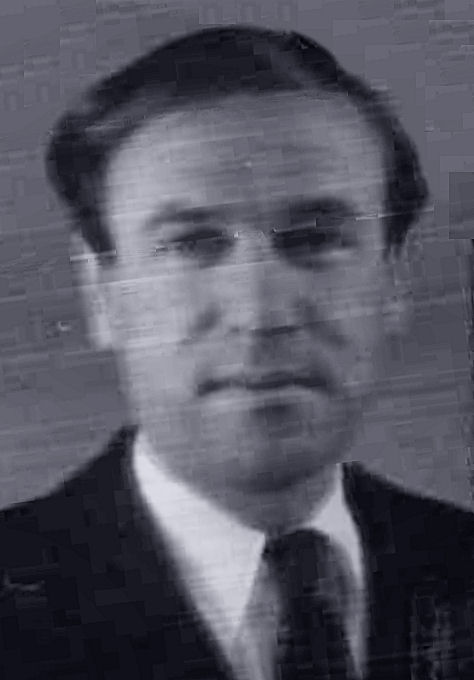 RAeC 1939
- Details
- Hits: 4190
| Flt-Lt Thomas 'Tommy' Rose DFC | ||
|
|
|
|
|
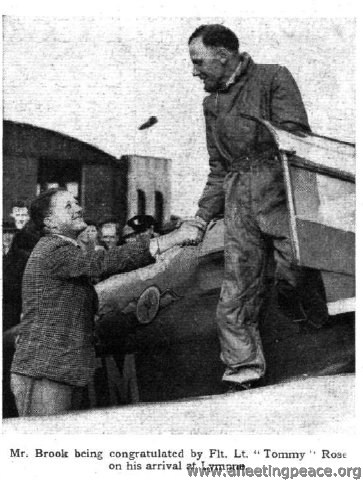
b. 27 Jan 1895 - Alton, Hants One of the best-known racing and pioneering pilots of the 30s. His father, John, was a farm bailiff at Basing Farm, Froxfield, nr Petersfield, Hants. After working briefly as a bank clerk, Tommy joined the Royal Navy in 1914 and then transferred to the R.F.C. in June 1917. "He was shot down three times, but escaped each time. He was awarded the DFC for his work with the fighter squadron in which Billy Bishop, VC, served. " m. 1925 Margaret Elizabeth [Ashford], [divorced 1938] Retired from the RAF in 1926 with the rank of Flight-Lieutenant. In December 1931, he made an unsuccessful attempt on the UK-Cape record, and then flew back "by easy stages". From Oct 1933, Manager and Chief Instructor at Sywell. "TOMMY ROSE is gone from Sywell, but not forgotten. As sales manager for Messrs. Phillips and Powis, the Reading aircraft manufacturers, he spends quite a lot of time flying round the country. Last week his photograph was 'splashed' in all the national daily papers, greeting Mr. H. L. Brook, the Yorkshireman airman, on his arrival at Croydon after breaking the Australia-England record previously held by Jim Mollison. There was no mistaking Tommy’s famous sports jacket and boyish grin! Mr. Rose, the way, left a last impression at Sywell. Shortly before leaving, when the new gate was being erected in front of the clubhouse, he carefully placed his foot in the wet cement and printed beside it 'Tom Rose' with a trowel. The cement hardened, and the 'Rose' mark is there for posterity to reverence! Hundreds of feet have since trod the hallowed spot." - Northampton Mercury, 12 April 1935 Competed in the King's Cup six times, winning it in 1935 ...
© The Royal Aero Club [0122-0170] ... and coming second in 1934 and 1936. [The 1935 King's Cup itself recently sold at auction for £3,900:
Photo kindly supplied by Sarah Chambers, reproduced by kind permission of Sworders Fine Art Auctioneers.] He became a national hero in March 1936 after his flight to Cape Town and back; "he can now claim to have made the fastest time for the trip both out and home. His new record is 6 days 6 hr. 57 min. (he got to the Cape in 89 hr. 37 min.), which beats F/O David Llewellyn's time—the previous best—by 5 hr. 6 min."
After the flight to the Cape, he had tea with the Prime Minister, General Hcrtzog, and also saw General Smuts. However, he was charmingly modest about his achievements: "TOMMY ROSE ON LONG FLIGHTS SAYS RECORD ATTEMPTS ARE 'LARGELY BUNKUM' This flight business is bunkum! The authority for that picturesquely phrased piece of information is Flight- Lieutenant Tommy Rose, and he should know, for he hit the headlines in all the national newspapers when he smashed all records for the flight from London to the Cape. In a talk to the Round Table at Stewart's Cafe on Monday he summed up the whole business in these few words: 'All long distance flights are largely bunkum. The national newspapers, if there is no other news at the time, whip up an interest in these flights, and if one gets there safely and breaks a record everyone thinks: 'By gad, here's one of the twelve apostles come to life!’ (Laughter.) 'But I assure you there is nothing in it. The only things you have got do to be successful are to get the best machine you can find and then practise sitting still for a long, long time . . . . ' Reflections wise and witty on flying in general and his own flight in particular made Flight-Lieutenant Rose's talk one of the most delightful and amusing to which Tablers have listened to for a long time. His racy manner produced a laugh at almost every sentence, and a more unassuming world record breaker than this genial young man would be difficult to find. There was one richly humorous story which is worth repeating. 'When I eventually got to the Cape I had to broadcast to the Union,' he said. 'The announcer seemed very nervous and this was what he said: ’Who do you think I have here the studio? None other than Mr Tom Mollison, who flew from London to the Cape in 37 days 18 hours.’ I met General Hertzog few days later and he said: 'if it takes all that time to fly, don't you think you had better come by boat next time?’ Flight-Lieutenant Rose answered a number of questions and urged the need for municipalities laying down landing grounds for aircraft. Members of the Rotary Club and of other Round Tables were present, as guests, to hear the airman’s talk. " - Eastbourne Gazette, 6 May 1936
© The Royal Aero Club [0129-0039] Before the 1936 Schlesinger Race to Johannesburg, he predicted: "It is my opinion that the pilot of the aeroplane which gets there in under forty-eight hours will deserve just about the biggest bunch of bananas ever found. Having got lost myself many times down this route when flying without wireless, I fully expect to do so again, and the pilot in this race who can honestly say at the end that he was sure of his position all the time will either be very lucky, very clever, or have a queer idea of honesty." From 1939 to 1946, Chief Test Pilot for Miles Aircraft, living in Sonning, Berks; in July 1943 he was reported to have "improved considerably and to be well on the way to recovery, after he contracted a chill when captaining his works cricket team. " Won the Manx Air Derby in 1947, still flying a Miles Hawk; three circuits of the island at 181 mph. d. 20 Jun 1968 - Alderney, Channel Islands. |
||
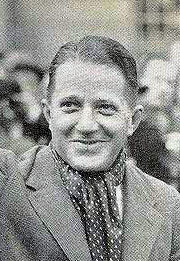 1936

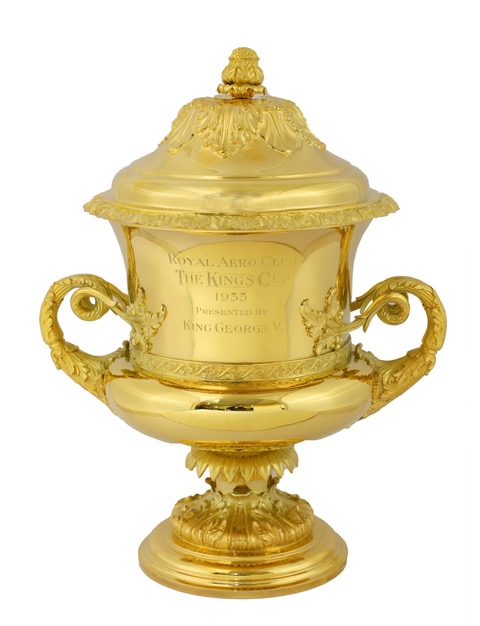
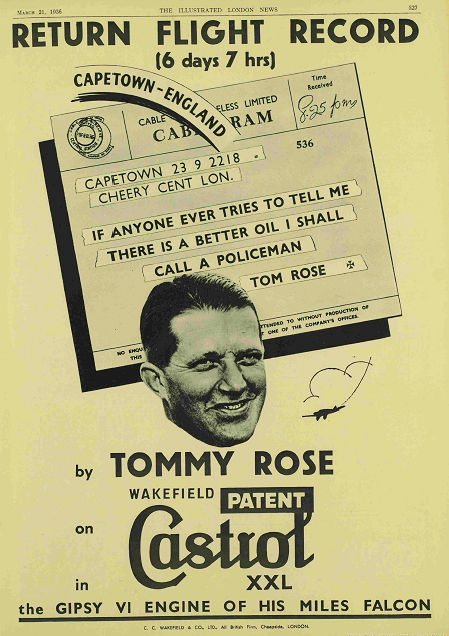
- Details
- Hits: 3574
| Peggy Louise Salaman | ||
|
|
|
|
|
b. 20 September 1910 (or possibly October 1907) Peggy's brief moment in the spotlight came in November 1931. She and Gordon Store flew her D.H. Puss Moth 'The Good Hope', and two lion cubs, to Cape Town, in 5 and a half days, breaking Glen Kidston's record by 28 hours.
They gave her a celebration dinner at the Dorchester, at which she modestly pointed out that Gordon did "all the navigation, the chief part of the piloting, the forced landing [they missed an aerodrome and had to spend the night in 'dangerous country'] and for landing and taking off at the majority of the aerodromes", as well as looking after the engine. She did all the organisation and relieved Mr Store "when the flying was easy". Nevertheless, neither of them had more than about 20 hours sleep during the entire flight. The lion cubs? She picked those up in Juba, [Southern Sudan, as you probably know] took them to Cape Town and then on to England. They appeared in the Christmas circus at Olympia and then went on the road with Bertram Mills's Circus. In October 1932 they were reported as being "sturdy young lions" who were "a picture of health". So that turned out well, then. See a newsreel of her, and the lion cubs of course, here. Their Cape Town record only stood for a few months, though; Jim Mollison managed it at the second attempt, in under 5 days, the following March. She was, however, still (just) famous enough in May 1932 to get to meet Amelia Earhart at the American Embassy - more detailshere: Pioneering Women. |
||
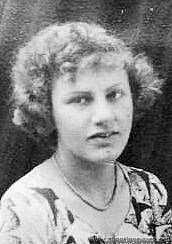 1935
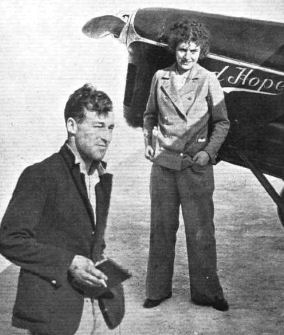
- Details
- Hits: 3568
| Mr Charles William Anderson Scott | ||
|
photo: 1934, aged 31 |
|
|
|
Born 13thFebruary 1903 in London One of the truly great aviators of the 1930s, establishing many long-distance records and winning some of the most important long-distance races of the period, but rather went to seed after that and shot himself after WWII. Scott wrote a book, and enterprisingly called it 'Scott's Book'. "Scott is a splendidly-built six-footer, always in excellent condition. His other sporting recreations are golf and sailing." "Charles Wiliam Anderson Scott, aviation editor of the 'News Chronicle', is the elder son of Mr Charles Kennedy Scott, the musician and conductor. Educated at Westminster School, the future airman began his career as a sugar planter in Demerara, South America. The experience did not prove at all to his liking and he returned to England in 1922. Sailing was his passionate hobby - it still is - but as a youth trying to find his rightful career, flying did not occur to him until a friend suggested joining the Royal Air Force. Young Charles Scott sent in his application and thought little more about it until he found himself accepted and ordered to report to the Flying School at Duxford. The Royal Air Force occupied the next four years of his life [he was heavyweight and light-heavyweight boxing champion whilst in the RAF] and in 1926 he was again wondering what was the next move when chance played the deciding game again. A sharp shower of rain sent him scurrying into Australia House for shelter with the result that he was bound for Australia not many weeks later. There Scott became a pilot with Qantas Ltd., flying the mail routes in Western Queensland and acting as a flying instructor from 1927 to 1930. During that period he met the late Bert Hinkler, Mrs Mollison and the late Sir Charles Kingsford Smith and was inspired to break records. Scott resigned his flying job in Queensland and came to England in 1931 determined to break the England-Australia record, despite accumulating financial troubles caused by the rising Australian rate of exchange. He got there, reducing the record to 9 days 3 hours. That year he flew back again and made another record of 10 days 23 hours. Both flights beat Sir Charles Kingsford Smith's times. In 1932 he attacked the England-Australia record for the second time and regained it with 8 days 20 hours. The greatest adventure of his career was the magnificent flight in the Mildenhall-Melbourne air race of 1934 when he and the late Tom Campbell Black reached Melbourne in just under 3 days.
On September 17, Scott was married to Miss Greta Bremner, younger daughter of Mr and Mrs E L Bremner, of Melbourne, Victoria, Australia, only 12 days before the start of the Johannesburg air race." - from the Celebration Dinner programme after the race (October 14th 1936 at Claridge's Hotel).
In 1936, his "Flying for All" Display embraced over 150 centres in the United Kingdom and Irish Free State, and was aimed particularly at "familiarising people with some of the cheap, easy-to-fly light aeroplanes available to-day". Died 15th April 1946, in Germany, aged 43
p.s. The £10,000 MacRobertson first prize would, using average earnings, be worth about £2 million today. |
||
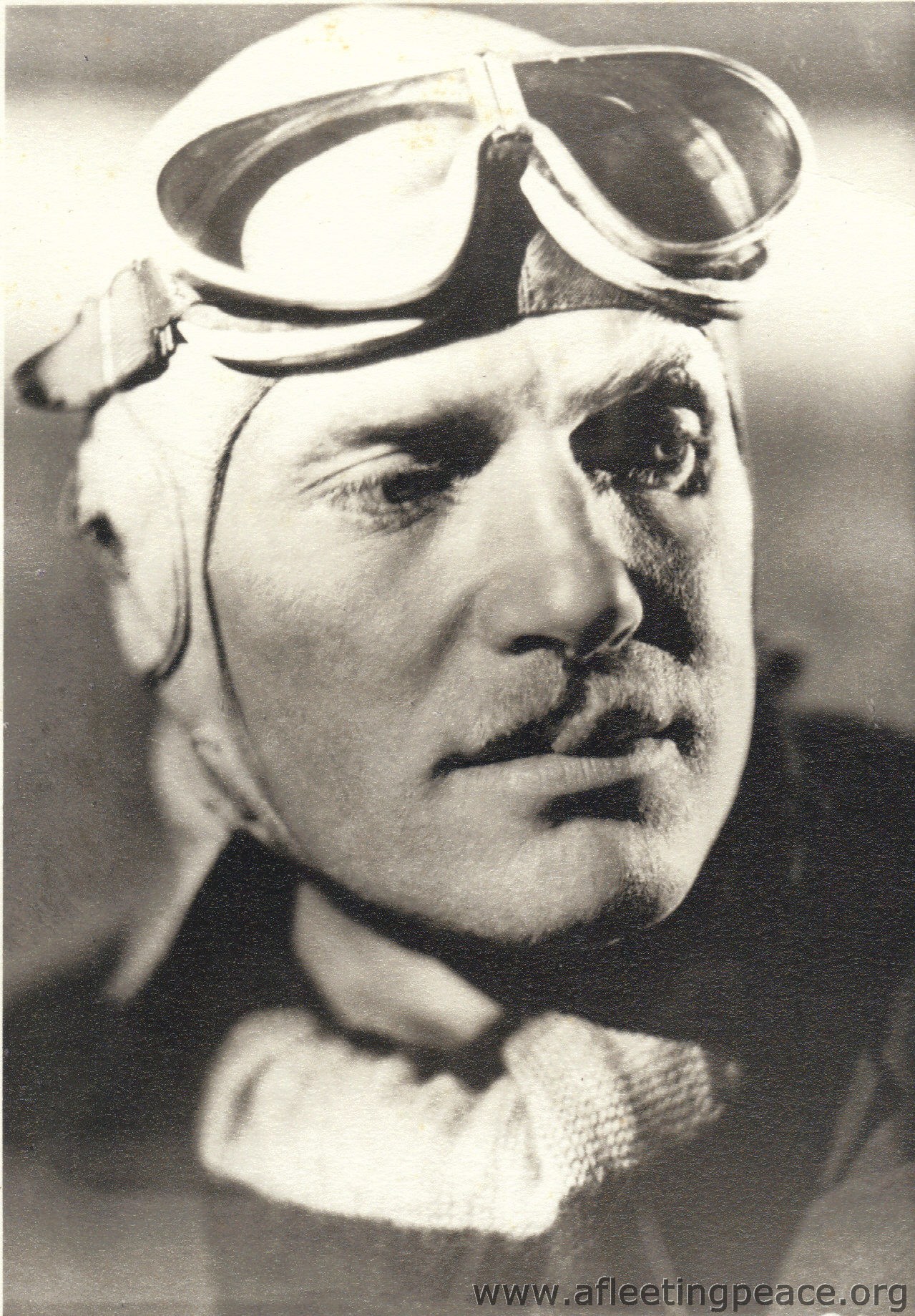
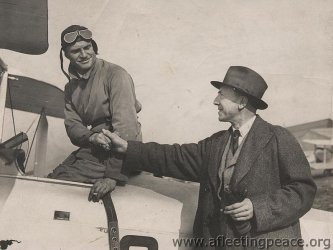 with his father Charles
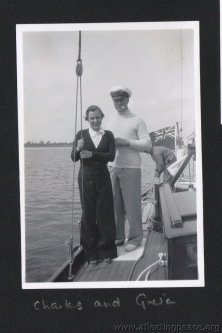
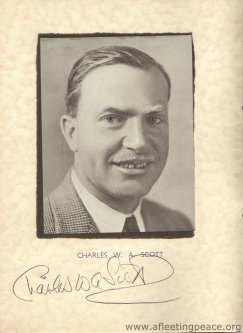


- Details
- Hits: 3446
| Victor C Smith | ||
|
|
|
|
|
Made several flights through Africa in record-breaking attempts, but his "pluck ... exceeded his luck". For example; in 1932, aged 19, he took off from Cape Town in a DH Moth, to try to break the record to London. He missed breaking the record by a few days, having been delayed by a 'run-in' with some fierce members of the Toureg tribe in the Sahara. He got out a cup of water and a packet of liver salts and drank the foaming liquid; such a man, they thought, must have supernatural powers, so they let him go. Reaching London eventually, he then swapped the Moth for a Comper Swift and tried to fly back, but suffered engine failure; this time he had to walk 80 km through the Sahara. You'd think that would be it, but no: he found another aeroplane and continued south, only to run out of fuel just short of Cape Town. In all, he made 21 forced landings during his flying career, all without serious injury. He wrote a book of his experiences, called 'Open Cockpit over Africa'. In 1936, "Victor Smith was the most enthusiastic person at Portsmouth, and was obviously deeply in love with his Sparrowhawk". Aaaah. Became a flying instructor after the race, then in WWII flew Beaufighters in Yugoslavia. |
||
 1936, aged 23
 2000, aged 86
- Details
- Hits: 4717
|
Miss Winifred Evelyn Spooner Royal Aero Club Certificate No. 8137 (11 Aug 1927) |
|
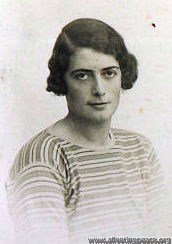 1927, aged 27 |
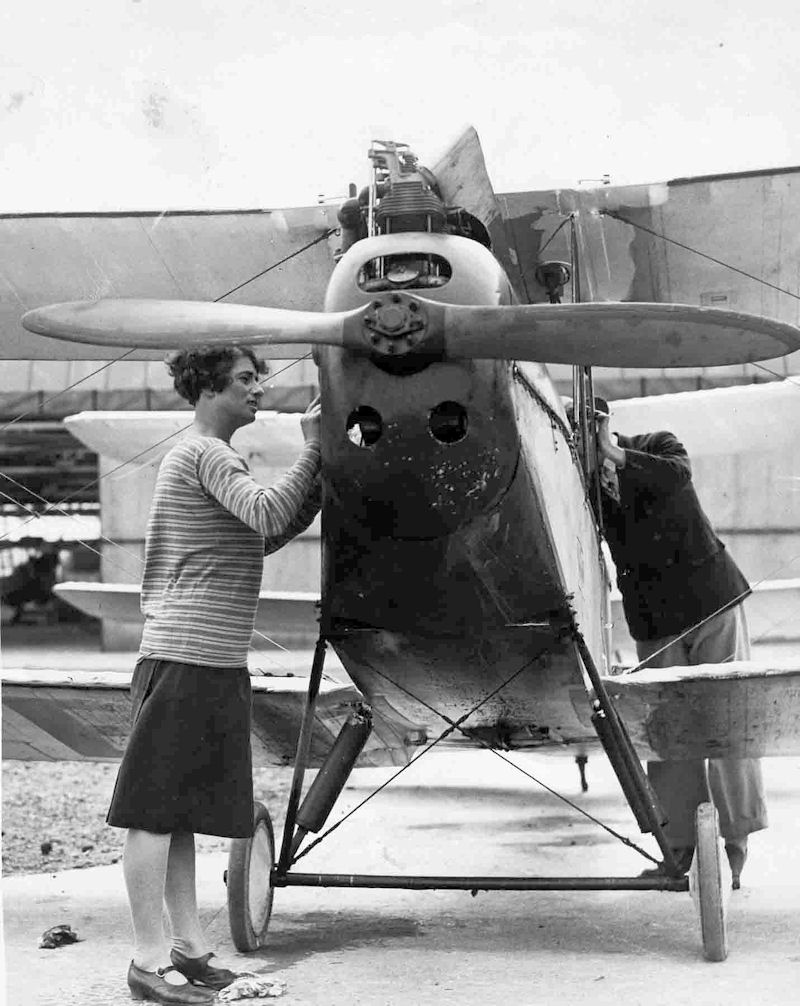 |
|
'Bad luck Wimpey' was one of the best-known women aviators of the time, and the one generally regarded as the best. She was awarded the International League of Aviation's Trophy for women aviators in 1929, and in 1930 Capt C D Barnard described her as 'the finest woman pilot in the world' (He went on to say that Lady Bailey was regarded as the 'second finest airwoman in the world', and we don't know what she thought about that...) Learnt to fly in 1926 and took it 'more seriously than most' - in her first race in April 1928, she won the Suffolk Handicap (21 miles at 78mph), ahead of Neville Stack and four other male rivals; she won the 'heavy' category in the Round Europe Contest for Touring Aircraft in 1930 - covering 4,700 miles at 102mph, ("a very fine performance indeed", said The Times) and also competed in the Ladies event at Reading (May, 1931) - the other competitors were Amy Johnson, Grace Aitken, Pauline Gower, Dorothy Spicer, Susan Slade, Gabrielle Burr, Christina Young, and Fidelia Crossley - a historic gathering indeed. Photo here
She soon took her 'B' (Commercial) Licence, and at one stage was the only professional woman pilot in the country. In September 1927 her first flight abroad was to Venice to support the British Team in the Schneider Cup in Venice. Alan Butler (with Peter Hoare as passenger), and Hubert Broad, who took Maia Carberry, also went and, in case you were wondering, "Mrs. Carberry wore a pale blue leather flying helmet to match the colour of her Moth aeroplane." She soon became regarded as 'one of the few women who matter in the air world'; in March 1928, when King Amanullah of Afghanistan was on a state visit to London, he inspected "the latest types of Imperial Airways passenger machines and a number of small Moth machines in private ownership. He carried on, through an interpreter, an animated conversation with Miss Winifred Brown, of Manchester, and Miss Spooner, of London, both of whom own and fly small two-seater machines." In the 'Woman's World' section of the Inverness Courier of April 1928, this description of Winifred appeared: "[she] has not flown for very long, for it was only about three years ago that I knew her in Cologne, when she then drove, instead of an aeroplane, a two-seater car, through the crowded streets of Cologne, at a speed which most people would have been terrified to attempt. She was always, however, extremely cool and composed, and though her passengers were sometimes nervous she never seemed so. She was always very sporting, and played an excellent game of tennis. A good-looking, typically English girl, she made many friends among the British army in Cologne when doing voluntary work with the Y.M.C.A. there. [Winifred was with the 'Army of Occupation' in Germany at the time]" She did have what she later described as her 'greatest air thrill' on Marlborough Common in May 1929; "she had been taking passengers up all day when, after one flight, she said she was not quite satisfied with the controls, and refused to take the next man until she had attended to the aeroplane. After doing so she started the propeller, and as she walked away from it the machine suddenly moved forward. Pluckily, Miss Spooner jumped and caught hold of the wing, her idea being to clamber into the cockpit and stop the engine. The machine quickly gathered speed, and she was dragged 40 or 50 yards [she later reckoned it was about 30 yards], when to the horror of the crowd the plane turned and buried its nose in the ground, hurling Miss Spooner some distance. She was unconscious. Doctors were sent for and she was taken to hospital. 'We thought she must have been killed,' an eye-witness told our representative." She was taken to Savernake Hospital suffering from a sprained wrist, cuts, and slight concussion. She does seem to have had quite a few run-ins with the local Constabulary; firstly in January 1929 for failing to keep her Alsatian dog under proper control (it had attacked another dog which "had no chance"), then in August 1929 for failing to produce a car driving licence (she said she had forgotten about it and flew to France the following day); then in 1931, she was fined £35 for leaving her motor car unattended and for failing to have lights on it. When she was told that she would be reported, she said: "I am used to it." A police-superintendent said there were no previous convictions recorded against her, as far as Reading was concerned. The Chairman then asked 'And none in the air? She replied 'There are no policemen in the air. That is why I like it.'" I'm certainly sorry I missed her talk, given in April 1928 at Harrods in Brompton Road, on "Flying as a New Delight for Womankind". Later, in the early thirties, she wrote for "Good Housekeeping" on, of course, "Flying for Women", alongside such luminaries as John Galsworthy, Kate O'Brien, and Hugh Walpole.
September 1929 saw her accompanying NFS's chairman Freddie Guest (q.v.) to Nairobi, to inaugurate an air taxi service and give flying lessons. They took 3 aeroplanes with them, and flew them back (via South Africa) in February 1930. She and E C T 'Cecil' Edwards tried to fly a Desoutter to Cape Town and back in December 1930, but this expedition ended up in a forced landing in the sea off southern Italy; Cecil and Winifred had to swim a couple of miles to shore.
She regularly competed in the King's Cup - coming 3rd in 1928 - and was a guest at Amelia Earhart's reception at the Royal Aero Club in May 1932.
She was personal pilot to Leicestershire M.P. Lyndsey Everard from February 1931 - they are seen here with Nigel Norman. And then, suddenly, on 13 January 1933, she was dead - not in an air crash, but as a result of a cold which rapidly worsened into pneumonia. Only few days before, in conversation with a friend, she had mentioned that her mother had died from influenza in 1918. "The deaths of both mother and daughter occurred with the same suddenness." They are buried together in Hinton Parva: see http://www.earlyaviators.com/espoone5.htm
She left £1,357 0s 8d, and her brother, Capt. Frank Vivian Spooner, Indian Army (retd) was appointed administrator. She hadn't got round to writing a will. There is a scholarship in her memory at Sherborne School for Girls. "In the passing of Winifred Spooner the world has lost a great woman... she stood out as a woman of indomitable courage". Winifred owned: a 1926 DH.60 Moth (G-EBOT), a 1928 DH.60G Gipsy Moth (G-AAAL, which she sold to Elise Battye); a 1930 Desoutter IID (G-ABCU - this is the aeroplane she and E.C.T. Edwards ditched in the sea off Naples in December 1930), and later a 1932 Breda 33 (G-ABXK), which was sold in Italy just 3 months before her death. Winifred's brother Tony was chief flying instructor at the Montreal Flying Club in 1931. He was killed in March 1935 in Egypt when piloting a D.H. 84 Dragon, SU-ABI belonging to Misr Airwork, when it was caught up in a sandstorm and both engines failed. |
|
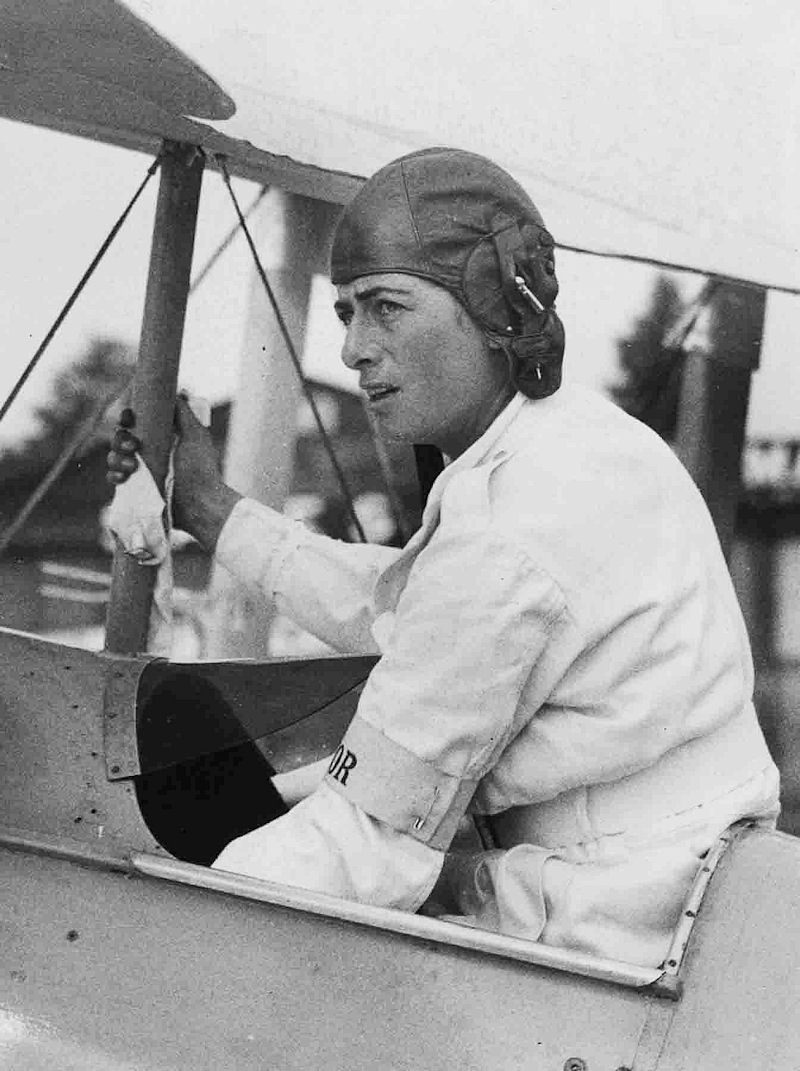
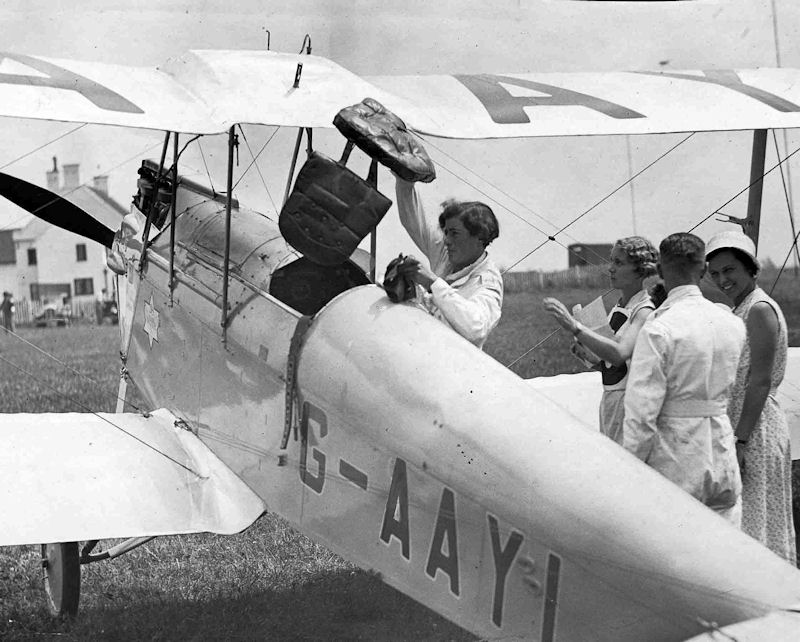

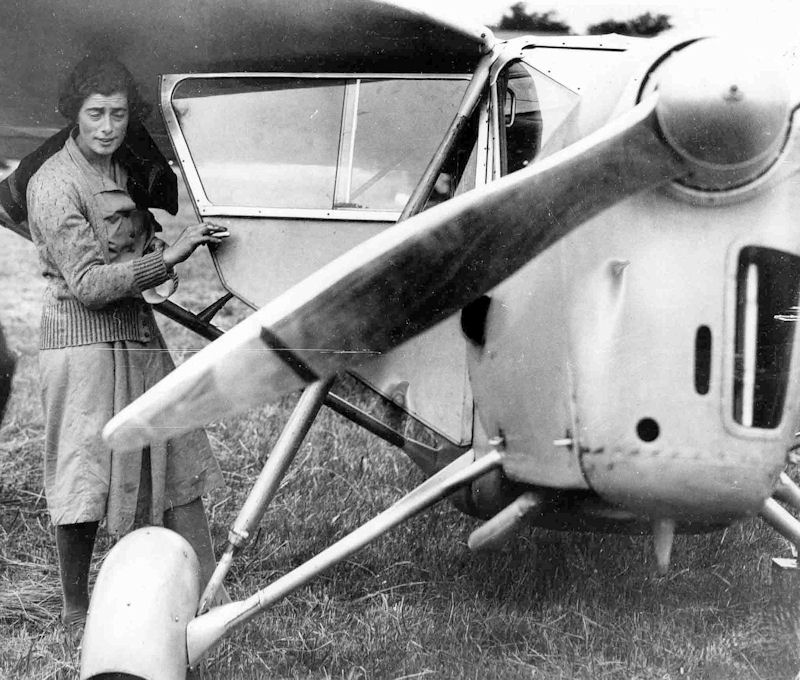
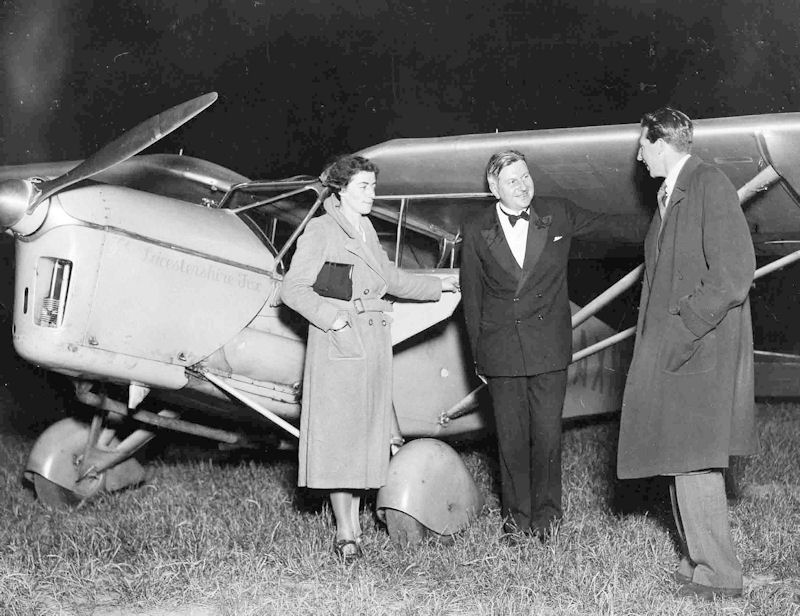
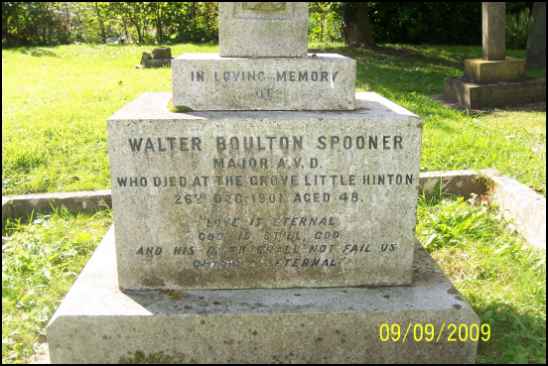
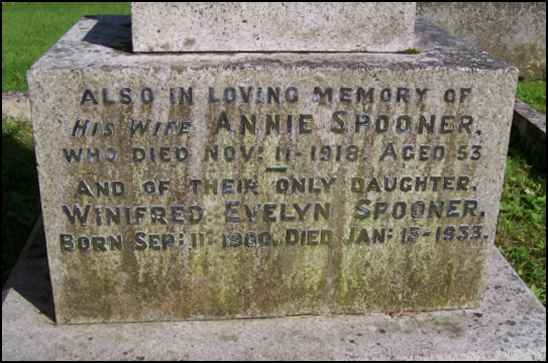
- Details
- Hits: 3100
| Captain Gordon Store, MVO, OBE | ||
|
|
|
|
|
b. Kimberley, South Africa, on January 28, 1906. In 1931 Gordon was co-pilot and navigator on the 19-year-old Peggy Salaman's record-breaking flight to South Africa in a De Havilland Puss Moth. They set off on Oct 30, 1931 from Lympne in Kent and five days, six hours and 40 minutes later they landed at the Cape, knocking more than a day off the record. Young Gordon was educated at Kimberley Boys High School, at Mill Hill and Imperial College, London. He learned to fly at the De Havilland school and in 1926 was commissioned into the Reserve of Air Force Officers. After his flight with Peggy Salaman in 1931, Store remained in South Africa as a director of Aero Services, operating from a grass airfield at Wynburg. Three years after setting this record Gordon Store joined Imperial Airways, serving on the airline's African and Empire routes before beginning a long association with the Atlantic in 1939, when he commanded one of the three crews which operated the first regular transatlantic services.After the war Store was recruited by Air Vice-Marshal Don Bennett of "Pathfinder" fame as operations manager of British South American Airways, which merged with BOAC in 1949. Store became a Douglas Stratocruiser captain. d. October 4, aged 87. |
||
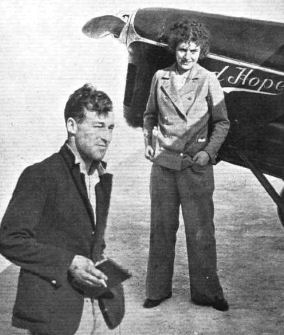
- Details
- Hits: 10501
|
Mary du Caurroy Tribe, Duchess of Bedford
|
||
| b. Mary du Caurroy Tribe in 1865 in Stockbridge Hants, the second daughter of the Rev. W H Tribe; he later became Archdeacon of Lahore and (after growing up in Sussex, where she and her elder sister Zoe were looked after by their uncle and aunt), she lived there for several years. It was in Lahore that she met, and married, Lord Herbrand Russell, who in 1888 became the 11th Duke of Bedford.
She was probably best known as an aviator, but had several other strings to her bow; she was a member of the Society of Radiographers, and was "interested in natural history, especially ornithology". To prove this, she once shot 200 pheasants in a day and (although presumably not the same day) caught 18 salmon weighing 200lb. Actually, she wrote scientific papers on ornithology, and was a member of the British Ornitholgists' Union. She was deaf (I'm not sure if this was always true, or if it developed later on in life). During WWI, Woburn Abbey was turned into a hospital and every morning the Duchess would "go on duty at 5 or 6am, and in her nurse's dress would assist at nearly every operation." The King was pleased to award her the 'Royal Red Cross, in recognition of her valuable nursing services', in Jan 1918. Her personal pilots included C D Barnard, James Allen and (from 1934) R C Preston, but she herself learned to fly in 1933. Dame Mary from 1928. She owned: a 1927 DH.60X Moth, G-EBRI; the 1927 Fokker F.VIIa, G-EBTS, 'The Spider', in which she broke the England-Cape Town record in 1930; a 1928 DH.60G Gipsy Moth (G-AAAO); later she owned a 1931 DH.80A Puss Moth, G-ABOC, later sold in Kenya, a 1932 DH.60G Gipsy Moth, G-ABXR, a 1933 GAL ST.4 Monospar 2 G-ACKT, registered in October, in which her personal pilot, James Bernard Allen, was killed in December 1933, and finally a 1934 D.H.60G Moth G-ACUR in which she flew out over the North Sea in March 1937 ... ... and disappeared. |

- Details
- Hits: 3185
| Frederick Roy Tuckett | ||
|
|
|
|
|
b. 10 Apr 1901 in Bushey, Herts. 5ft 11in tall, dark hair, blue eyes. Flew his Moth solo to Cape Town in 1929-30 and returned in November 1930 on the 'Balmoral Castle' steamship to his home at 1 Hatton Gardens, London. A year later, flew Miss Cook (a descendant of Charles Darwin) to study gorillas in Africa, and in 1935 flew the route of the 1934 MacRobertson Race to film it from the air. In 1935, apparently (according to the Hull Daily Mail), "Everybody knows of Mr Roy Tuckett, the aerial film pioneer whose film, London - Melbourne," is attracting such large audiences at cinemas ail over the country, but few know that he was very nearly compelled to give up his career as airman through acute digestive trouble. In his own words: "A year ago I feared I could not carry on, could not eat a meal, could not even drink a cup tea without suffering agony from indigestion. Nothing tried seemed to bring me any relief. I had two X-rays, and my appendix was removed—all to no avail. I was on the point of abandoning my flight over the Australian Air Race Route when, as a last resource, I tried Maclean Brand Stomach Powder. To amazement the first dose brought instant relief, so I continued the treatment, carried the powder on my flight, and am completely cured." In August 1935 he made a startling offer to Haile Selassie: "CABLE TO EMPEROR South African (sic) Airman Offers His Services Mr. F. Roy Tuckett. the South African airman-kinematographer, who filmed his solo Croydon-Capetown flight in 1929, and the London-Melbourne air race, yesterday cabled the Emperor of Abyssinia as follows:— Offer my services in defence of your country. Seven years' flying experience of light aircraft includes 50,000 miles cross-country flights over desert, or under tropical conditions, mainly in Africa. Would be willing to deliver aircraft to Addis Ababa." Interviewed by a Western Morning News representative, Mr. Tuckett explained the motive actuating his cabled offer. "I want to start a new life" he said." While he was waiting for a reply, after a while WWII broke out. Roy joined, firstly, the Fleet Air Arm (1939-41) as a Lieutenant then, in September 1941, the Air Transport Auxiliary (ATA). He was Pilot No. 658.
see https://www.ata-ferry-pilots.org/ He later moved to Scotland, and saw something very strange in 1953: "The time was 10.45 a.m., and there was a dead calm... Happening to glance up, I noticed darkish cloud overhead from the base of which issued a long dark streak, which I took to be smoke, pointing down towards the sea at an angle of 45 degrees, and finishing a hundred or so feet above it... As I watched, I noticed it was shortening and being sucked into the cloud at the junction with which it became vapourised and was revolving rapidly. There was considerable turbulence of the cloud base. It continued to be drawn into the cloud until, within a matter of about three minutes, it had disappeared... I have been all over the world as an air pilot and have seen waterspouts and "dust devils" being sucked into the clouds from the desert, but I have never before witnessed a phenomenon quite like this." He then wrote to the local paper; ". Weather freak Sir, —I was glad to see that other readers had observed similar phenomena in the sky on Monday. I suppose it must be ascribed to some particular weather trend. By the way, I have never been in the army. My flying experience was in my own plane in film work abroad.— Yours, &c., F. Roy Tuckett. West Balkello Cottage, Strathmartine, by Dundee, July 16, 1953." d. 25 April 1961 in London Roy owned the 1930 D.H60G Gipsy Moth G-AARW, later re-registered ZS-ABX. |
||